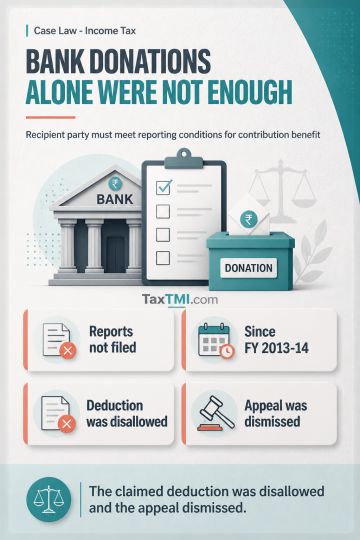
Political contribution deductions require recipient party compliance with contribution-reporting conditions; banking-channel donations alone do not qu...
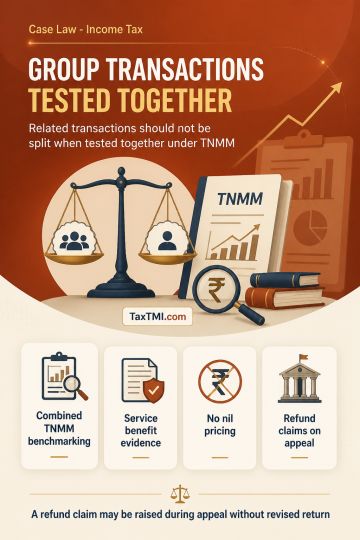
Aggregation under TNMM prevents selective testing of intra-group services without comparable uncontrolled transactions, while appellate additional cla...
Protective assessment cannot duplicate identical receipts under competing characterisations; remote services did not establish a taxable permanent est...
Current account treatment of overseas tournament services removed most FEMA findings, but excess EEFC remittance and delayed repatriation remained bre...
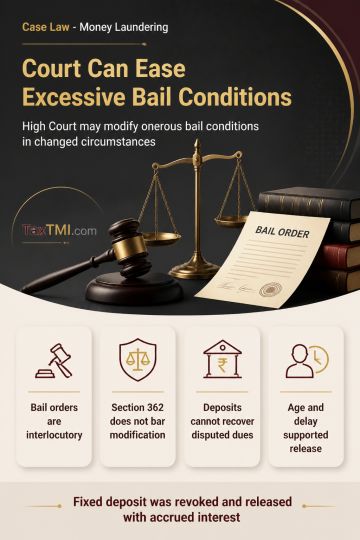
Modification of bail conditions remains available through inherent jurisdiction where onerous deposits undermine justice and cannot recover disputed d...
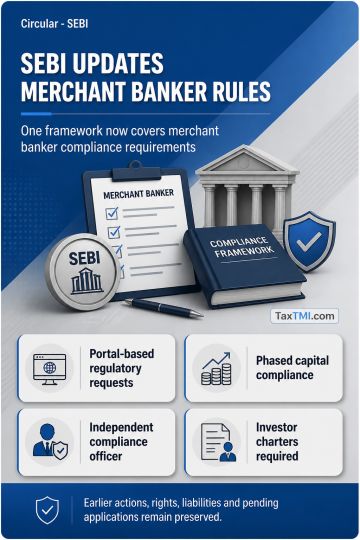
Merchant banker regulation consolidates registration, governance, capital, reporting, outsourcing and investor-protection requirements under an update...
Page of 4798
Press 'Enter' after typing page number.
601 to 620 of 95957 Results
❮
❯
❯❯
0 / 200
Expand Note
Add to Folder
No Folders have been created
+
Are you sure you want to delete "My most important" ?
The HC dismissed the writ petition, holding that the petitioner, having previously availed full excise exemption under Clause 5(a) as a new unit, cannot claim further exemption under Clause 5(b) for a subsequent substantial expansion within the ten-year period; an existing unit's expansion relief (triggered only for expansion of not less than 25% of fixed capital) is distinct from the full-investment benefit accorded to a new unit, and the two benefits cannot be compounded. The court rejected a promissory-estoppel plea, noting the petitioner received the notified benefit and that fiscal exemption notifications are to be strictly construed in favour of revenue; no interference was warranted.
The HC dismissed the writ petition, holding that the petitioner, having previously availed full excise exemption under Clause 5(a) as a new unit, cannot claim further exemption under Clause 5(b) for a subsequent substantial expansion within the ten-year period; an existing unit's expansion relief (triggered only for expansion of not less than 25% of fixed capital) is distinct from the full-investment benefit accorded to a new unit, and the two benefits cannot be compounded. The court rejected a promissory-estoppel plea, noting the petitioner received the notified benefit and that fiscal exemption notifications are to be strictly construed in favour of revenue; no interference was warranted.
Note: It is a system-generated summary and is for quick reference only.
 TaxTMI
 of 4798












 Join Channel


 TaxTMI