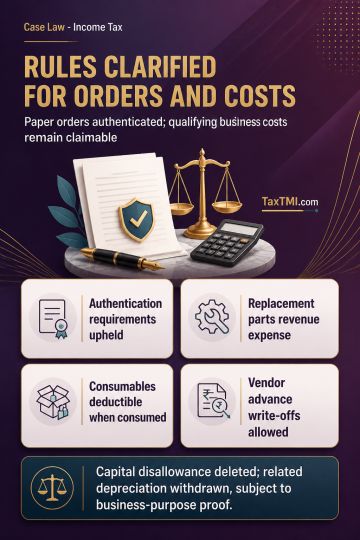
Authentication of paper assessment orders upheld, while qualifying repairs, consumables and vendor advance write-offs remain deductible business claim...
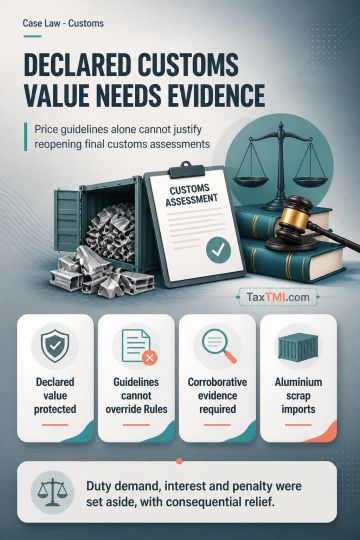
Transaction value cannot be rejected solely on non-statutory valuation guidelines without corroborative evidence supporting reassessment of final cust...
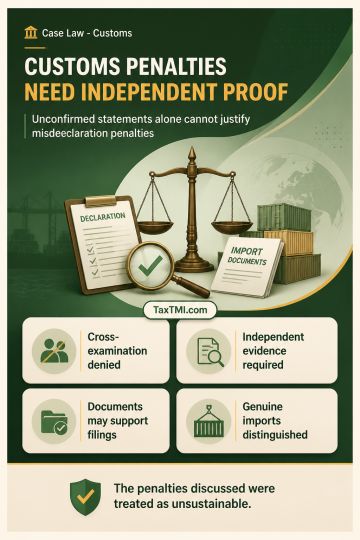
Cross-examination rights and corroborated evidence limit customs penalties for misdeclaration in genuine import transactions involving documented clea...
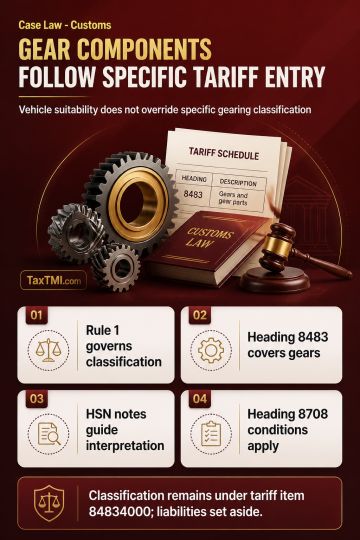
Tariff classification of vehicle gear components follows the specific gearing entry, displacing motor-vehicle parts classification and related liabili...
The HC held that the impugned order failed to apply sub-section (5) of Section 16 of the CGST Act, which was made effective from 1 July 2017 and prescribes that, notwithstanding sub-section (4), a registered person may claim input tax credit for invoices/debit notes relating to FY 2017-18 through FY 2020-21 in any return filed up to 30 November 2021. Because the authority did not consider the implications of s.16(5) when deciding the dispute between the anonymized petitioner and respondent, the HC set aside the decision and remitted the matter to the authority for fresh adjudication in light of s.16(5). The petition was disposed by remand.
The HC held that the impugned order failed to apply sub-section (5) of Section 16 of the CGST Act, which was made effective from 1 July 2017 and prescribes that, notwithstanding sub-section (4), a registered person may claim input tax credit for invoices/debit notes relating to FY 2017-18 through FY 2020-21 in any return filed up to 30 November 2021. Because the authority did not consider the implications of s.16(5) when deciding the dispute between the anonymized petitioner and respondent, the HC set aside the decision and remitted the matter to the authority for fresh adjudication in light of s.16(5). The petition was disposed by remand.
Note: It is a system-generated summary and is for quick reference only.
 TaxTMI
 of 4805







 Join Channel


 TaxTMI