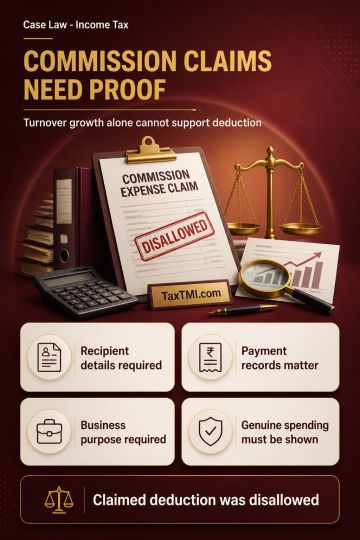
Business expenditure deduction requires proof of genuine commission payments and commercial allowability; turnover growth alone cannot validate the cl...
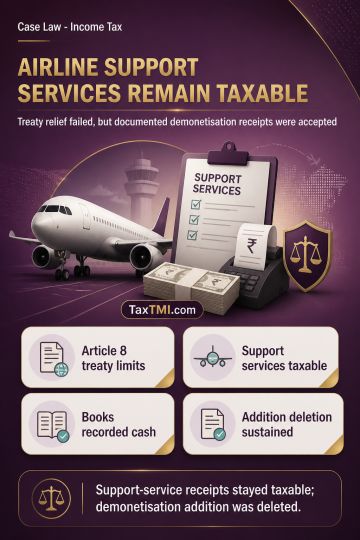
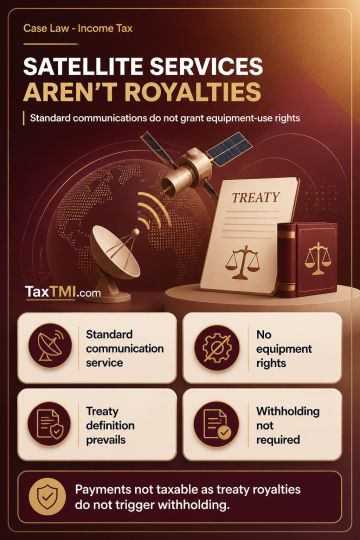
Article 8 treaty coverage excluded third-party airline support services, while documented demonetisation cash receipts remained accepted business inco...
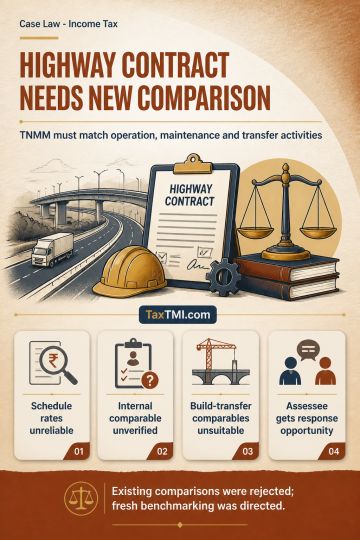
Functional comparability under TNMM requires highway contract benchmarks to reflect operation, maintenance and transfer activities, requiring fresh be...
The HC held that the impugned order failed to apply sub-section (5) of Section 16 of the CGST Act, which was made effective from 1 July 2017 and prescribes that, notwithstanding sub-section (4), a registered person may claim input tax credit for invoices/debit notes relating to FY 2017-18 through FY 2020-21 in any return filed up to 30 November 2021. Because the authority did not consider the implications of s.16(5) when deciding the dispute between the anonymized petitioner and respondent, the HC set aside the decision and remitted the matter to the authority for fresh adjudication in light of s.16(5). The petition was disposed by remand.
The HC held that the impugned order failed to apply sub-section (5) of Section 16 of the CGST Act, which was made effective from 1 July 2017 and prescribes that, notwithstanding sub-section (4), a registered person may claim input tax credit for invoices/debit notes relating to FY 2017-18 through FY 2020-21 in any return filed up to 30 November 2021. Because the authority did not consider the implications of s.16(5) when deciding the dispute between the anonymized petitioner and respondent, the HC set aside the decision and remitted the matter to the authority for fresh adjudication in light of s.16(5). The petition was disposed by remand.
Note: It is a system-generated summary and is for quick reference only.
 TaxTMI
 of 4803










 Join Channel


 TaxTMI