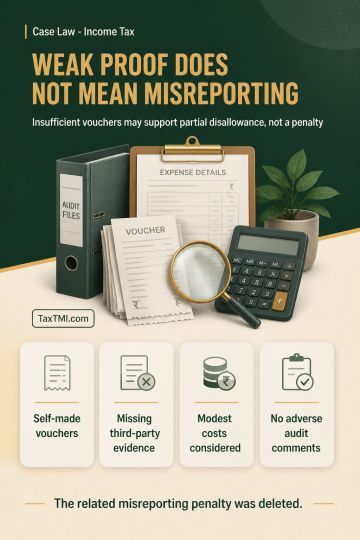
Authentication of paper assessment orders upheld, while qualifying repairs, consumables and vendor advance write-offs remain deductible business claim...
Transaction value cannot be rejected solely on non-statutory valuation guidelines without corroborative evidence supporting reassessment of final cust...
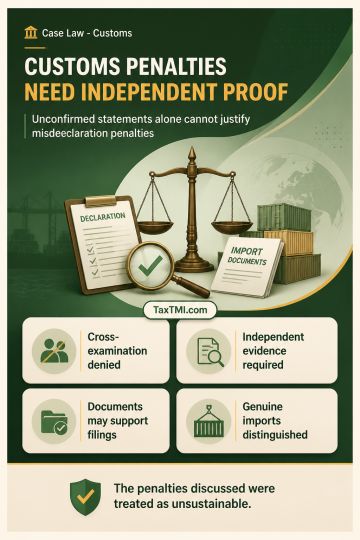
Cross-examination rights and corroborated evidence limit customs penalties for misdeclaration in genuine import transactions involving documented clea...
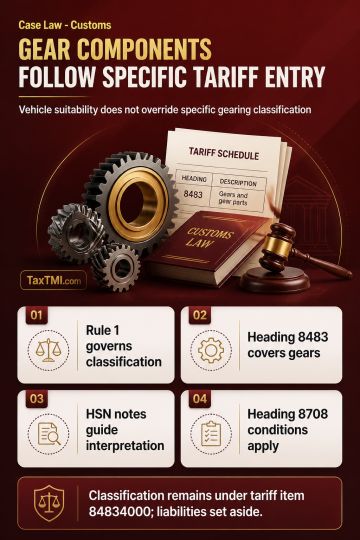
Tariff classification of vehicle gear components follows the specific gearing entry, displacing motor-vehicle parts classification and related liabili...
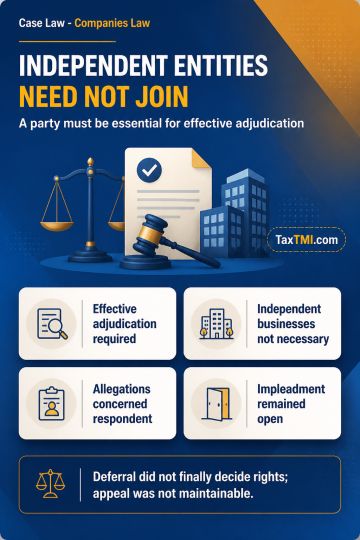
Necessary-party requirements limit impleadment of independent entities, while deferred consideration does not create an appealable adverse determinati...
DSC denied the applicant's regular bail application. The court found that, notwithstanding the applicant's contention of custody prior to formal arrest, authorities furnished sufficient "reasons to believe", grounds of arrest and statutory compliance under the CGST provisions, and relied on the SC (LB) pronouncement that CrPC provisions apply to GST arrests and that a Commissioner may authorise arrest on recorded reasons even absent a completed assessment order. Investigations remain at a crucial stage; incriminating statements under s.70 and evidence of dual accounting and substantial alleged tax evasion raise real risks of evidence tampering and witness intimidation. Having considered the gravity of the allegations and investigative imperatives, the court held the applicant failed to make out entitlement to bail.
DSC denied the applicant's regular bail application. The court found that, notwithstanding the applicant's contention of custody prior to formal arrest, authorities furnished sufficient "reasons to believe", grounds of arrest and statutory compliance under the CGST provisions, and relied on the SC (LB) pronouncement that CrPC provisions apply to GST arrests and that a Commissioner may authorise arrest on recorded reasons even absent a completed assessment order. Investigations remain at a crucial stage; incriminating statements under s.70 and evidence of dual accounting and substantial alleged tax evasion raise real risks of evidence tampering and witness intimidation. Having considered the gravity of the allegations and investigative imperatives, the court held the applicant failed to make out entitlement to bail.
Note: It is a system-generated summary and is for quick reference only.
 TaxTMI
 of 4803














 Join Channel


 TaxTMI
