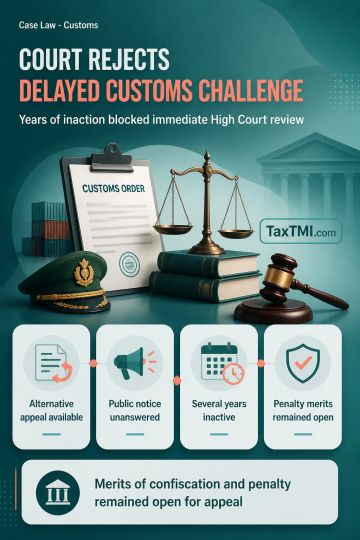
Alternative statutory remedy and unexplained delay barred writ review of customs confiscation adjudication, leaving merits for appellate consideration...
Authorised courier due diligence protects against penalties where declared exports conceal prohibited goods despite proper documentation and customs p...
Customs-controlled container movement now extends to DP World facilities, subject to segregation, inspections, reconciliation, and EXIM cargo priority...
CESTAT allowed the appeal and set aside the impugned order, remanding the matter to the original adjudicating authority for de novo determination of the assessable value under the Customs Valuation (Determination of Value of Imported Goods) Rules, 1988/2007 as applicable. The Tribunal found the reassessment and recovery were founded solely on investigation statements and an engineer's certificate without lawful opportunity for testing or cross-examination, constituting breach of principles of natural justice and improper reliance outside the strict procedural framework prescribed under section 14 and the Valuation Rules. The Tribunal further held that appropriation of amounts paid towards alleged duties on imports prior to the limitation period under section 28 lacked statutory empowerment and was not sustainable.
CESTAT allowed the appeal and set aside the impugned order, remanding the matter to the original adjudicating authority for de novo determination of the assessable value under the Customs Valuation (Determination of Value of Imported Goods) Rules, 1988/2007 as applicable. The Tribunal found the reassessment and recovery were founded solely on investigation statements and an engineer's certificate without lawful opportunity for testing or cross-examination, constituting breach of principles of natural justice and improper reliance outside the strict procedural framework prescribed under section 14 and the Valuation Rules. The Tribunal further held that appropriation of amounts paid towards alleged duties on imports prior to the limitation period under section 28 lacked statutory empowerment and was not sustainable.
Note: It is a system-generated summary and is for quick reference only.
 TaxTMI
  TaxTMI
 of 4828












 Join Channel


