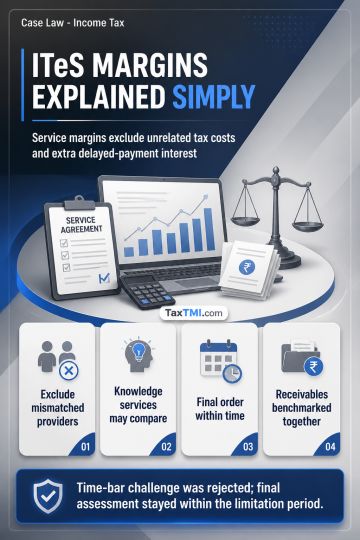
Transfer-pricing treatment of ITeS margins excludes pass-through tax recoveries and separate delayed-receivables interest after working-capital adjust...
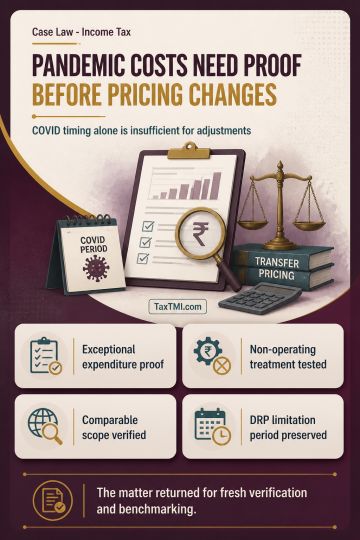
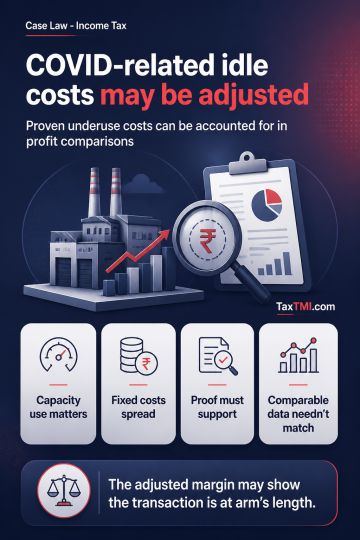
Capacity-utilisation adjustments under TNMM can neutralise substantiated COVID-related idle costs where underutilisation materially affects profitabil...
TNMM functional comparability requires excluding rice manufacturers from a pure Basmati rice trader's benchmark and recognising operating export recei...
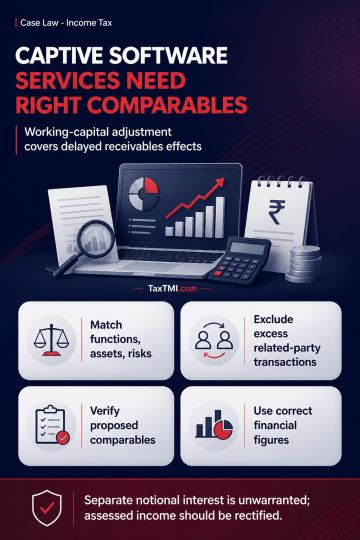
Working-capital adjustment subsumes delayed-receivable effects in TNMM benchmarking of captive software-development services, avoiding separate notion...
Transfer-pricing comparability requires exclusion of financially illogical super-profit comparables and correction of unsupported annual-report and ma...
Charitable character assessment preserves Section 80G approval despite inclusive spiritual teachings and incidental religious expenditure within the s...
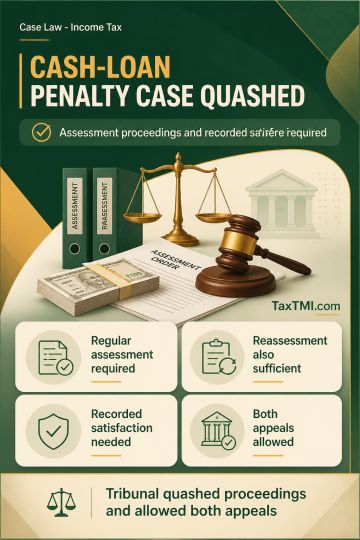
Penalty proceedings for cash-loan acceptance require assessment proceedings and recorded Assessing Officer satisfaction; absent these, the proceedings...
Page of 4828
Press 'Enter' after typing page number.
161 to 180 of 96556 Results
❮
❯
❯❯
0 / 200
Expand Note
Add to Folder
No Folders have been created
+
Are you sure you want to delete "My most important" ?
NCLAT affirms that the resolution plan approved under Section 31(1) of the IBC prevails over and extinguishes rights and concessions under the prior BIFR/SICA-sanctioned scheme; the clean-slate principle renders unclaimed, uncrystallised or omitted claims incapable of revival post-approval. The panel held the approved plan is binding on all stakeholders, including the appellant and the respondent bank, and that commercial wisdom of the CoC underlying the plan is determinative. Given the appellant's majority voting participation in the CoC, the appellant is estopped from challenging the plan. No error is found in the tribunal's conclusion; the appeal is dismissed.
NCLAT affirms that the resolution plan approved under Section 31(1) of the IBC prevails over and extinguishes rights and concessions under the prior BIFR/SICA-sanctioned scheme; the clean-slate principle renders unclaimed, uncrystallised or omitted claims incapable of revival post-approval. The panel held the approved plan is binding on all stakeholders, including the appellant and the respondent bank, and that commercial wisdom of the CoC underlying the plan is determinative. Given the appellant's majority voting participation in the CoC, the appellant is estopped from challenging the plan. No error is found in the tribunal's conclusion; the appeal is dismissed.
Note: It is a system-generated summary and is for quick reference only.
 TaxTMI
  TaxTMI
 of 4828












 Join Channel