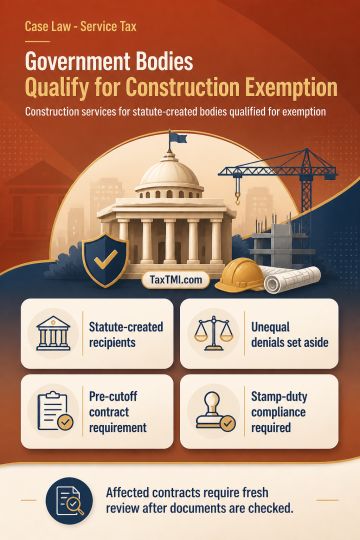
Governmental authority status supports construction-service exemption, while pre-cutoff contract and stamp-duty compliance requires verification on re...
Automated Free Sale and Commerce Certificates enable paperless processing while retaining risk-based manual verification for selected exporter applica...
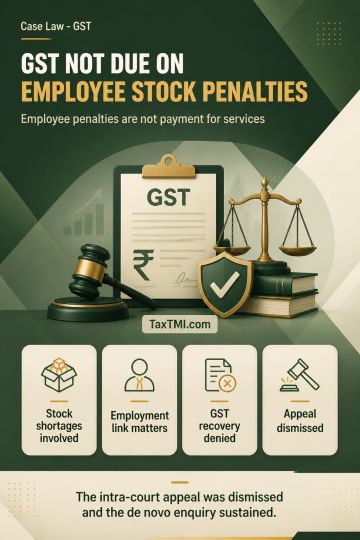
Employee stock-shortage penalties do not constitute consideration for services, preventing GST collection under Schedule II in employment relationship...
NCLAT upheld admission of a Section 7 petition, finding that the security trustee was duly authorized to initiate insolvency proceedings following assignment of the loan to an asset reconstruction entity. The Tribunal held that authorization was both pleaded and proved by the security trustee under the trusteeship agreement and by subsequent written authorization from the assignor, so the trustee had locus standi to file under Section 7. The Tribunal further affirmed initiation of CIRP against the corporate guarantors, noting prior dismissal of related appeals challenging CIRP against the principal borrower(s). The appeal was found devoid of merit and dismissed.
NCLAT upheld admission of a Section 7 petition, finding that the security trustee was duly authorized to initiate insolvency proceedings following assignment of the loan to an asset reconstruction entity. The Tribunal held that authorization was both pleaded and proved by the security trustee under the trusteeship agreement and by subsequent written authorization from the assignor, so the trustee had locus standi to file under Section 7. The Tribunal further affirmed initiation of CIRP against the corporate guarantors, noting prior dismissal of related appeals challenging CIRP against the principal borrower(s). The appeal was found devoid of merit and dismissed.
Note: It is a system-generated summary and is for quick reference only.
 TaxTMI
  TaxTMI
 of 4828






 Join Channel


