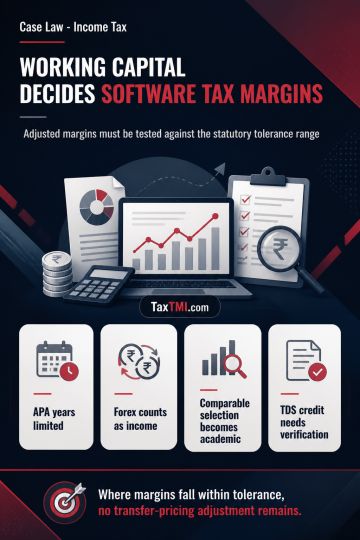
Working-capital adjustment determines whether software-services transfer-pricing margins fall within the statutory tolerance range, eliminating any ad...
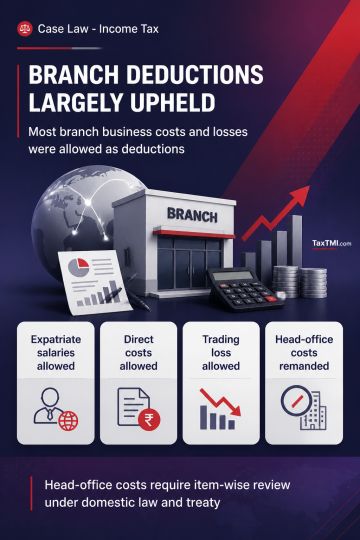
Permanent establishment deductions upheld for expatriate salaries, direct costs and trading losses, while head-office costs require fresh classificati...
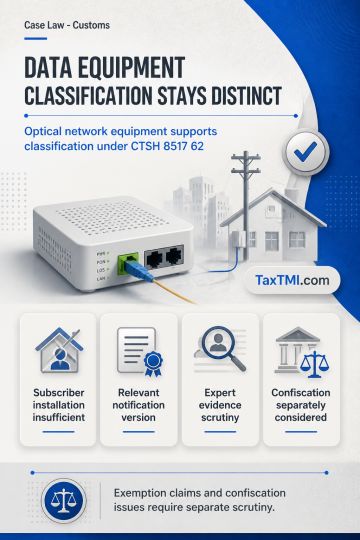
Data transmission equipment classification under CTSH 8517 62 remains distinct from residual classification, with exemption evidence requiring scrutin...
The HC allowed the petition, holding that the impugned services qualify as exports rather than intermediary supplies for GST purposes. The court concluded the petitioner performed services directly for a single overseas contracting party under a specific contractual arrangement, and absent a tripartite relationship the statutory definition of "intermediary" is not satisfied. Applying the reasoning of co-ordinate appellate and higher judicial authorities, the HC held that the place of provision lies outside the taxable territory and the supply constitutes export of services. Consequently, the respondents' contrary classification was set aside and the petitioner's treatment as an exporter was upheld.
The HC allowed the petition, holding that the impugned services qualify as exports rather than intermediary supplies for GST purposes. The court concluded the petitioner performed services directly for a single overseas contracting party under a specific contractual arrangement, and absent a tripartite relationship the statutory definition of "intermediary" is not satisfied. Applying the reasoning of co-ordinate appellate and higher judicial authorities, the HC held that the place of provision lies outside the taxable territory and the supply constitutes export of services. Consequently, the respondents' contrary classification was set aside and the petitioner's treatment as an exporter was upheld.
Note: It is a system-generated summary and is for quick reference only.
 TaxTMI
 of 4805












 Join Channel


 TaxTMI