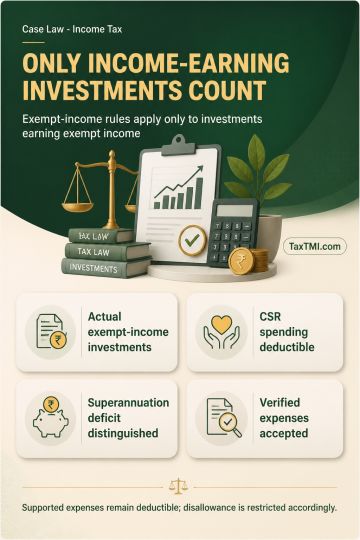
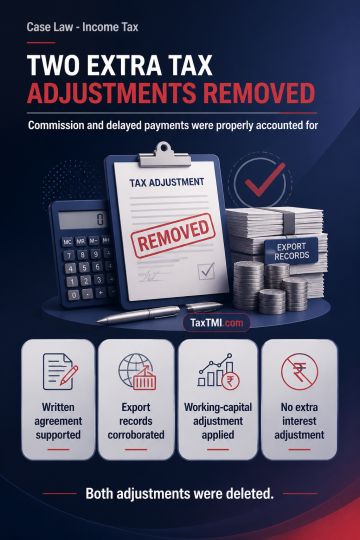
Exempt-income expenditure disallowance is confined to investments that actually generated exempt income, while supported business expenses remain dedu...
Objective characteristics and principal use govern mining-tyre classification, while fresh advance ruling applications may rely on additional technica...
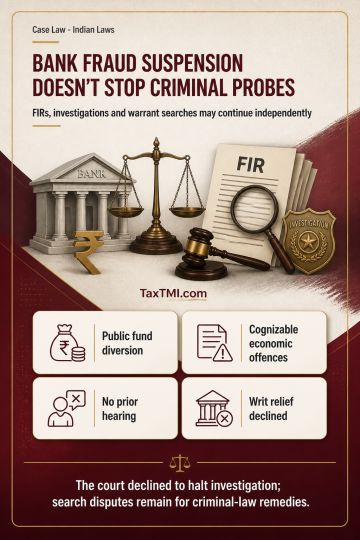
Administrative fraud classification suspension does not halt independent criminal investigation or warrant-based searches into alleged economic offenc...
The AAR held that the applicant's transaction constitutes a composite "works contract" under s.2(119) CGST, permitting ITC only on the structural steel/plant-and-machinery component as delineated in the contract Cost Abstract/Bill of Quantities, and not on civil or sheeting components. Cranes and HVAC were characterised as plant and machinery, supporting the secondary steel's eligibility. Concerning advances, the AAR ruled that time-of-supply principles in s.13(2) render receipt of advance as deemed receipt, and therefore ITC on supplier invoices for advance payments may be availed subject to the temporal limitation in s.16(4) - i.e., before 30 November following the FY or on filing the annual return, whichever is earlier.
The AAR held that the applicant's transaction constitutes a composite "works contract" under s.2(119) CGST, permitting ITC only on the structural steel/plant-and-machinery component as delineated in the contract Cost Abstract/Bill of Quantities, and not on civil or sheeting components. Cranes and HVAC were characterised as plant and machinery, supporting the secondary steel's eligibility. Concerning advances, the AAR ruled that time-of-supply principles in s.13(2) render receipt of advance as deemed receipt, and therefore ITC on supplier invoices for advance payments may be availed subject to the temporal limitation in s.16(4) - i.e., before 30 November following the FY or on filing the annual return, whichever is earlier.
Note: It is a system-generated summary and is for quick reference only.
 TaxTMI
 of 4805









 Join Channel


 TaxTMI