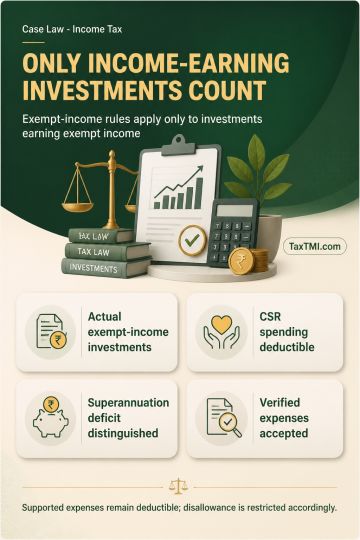
Exempt-income expenditure disallowance is confined to investments that actually generated exempt income, while supported business expenses remain dedu...
Objective characteristics and principal use govern mining-tyre classification, while fresh advance ruling applications may rely on additional technica...
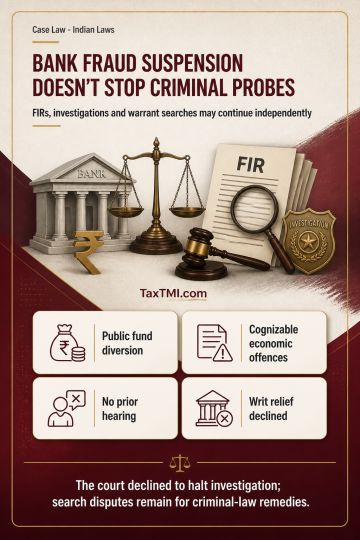
Administrative fraud classification suspension does not halt independent criminal investigation or warrant-based searches into alleged economic offenc...
AAR holds that the Applicant, though previously issuing tax invoices from its regular registration and distributing common input tax credit (ITC) under Rule 54(1A), must, with effect from 1 April 2025, obtain registration and operate as an Input Service Distributor (ISD) to receive and distribute invoices/ITC of common input services. The AAR determines that amendments to Sections 2(61) and 20 of the CGST Act mandate transmission of common input service invoices and distribution of the corresponding ITC only through the ISD mechanism; prior practice up to March 2025 is recognised but future receipt and distribution must comply with ISD registration and prescribed ISD procedures.
AAR holds that the Applicant, though previously issuing tax invoices from its regular registration and distributing common input tax credit (ITC) under Rule 54(1A), must, with effect from 1 April 2025, obtain registration and operate as an Input Service Distributor (ISD) to receive and distribute invoices/ITC of common input services. The AAR determines that amendments to Sections 2(61) and 20 of the CGST Act mandate transmission of common input service invoices and distribution of the corresponding ITC only through the ISD mechanism; prior practice up to March 2025 is recognised but future receipt and distribution must comply with ISD registration and prescribed ISD procedures.
Note: It is a system-generated summary and is for quick reference only.
 TaxTMI
 of 4805













 Join Channel


 TaxTMI