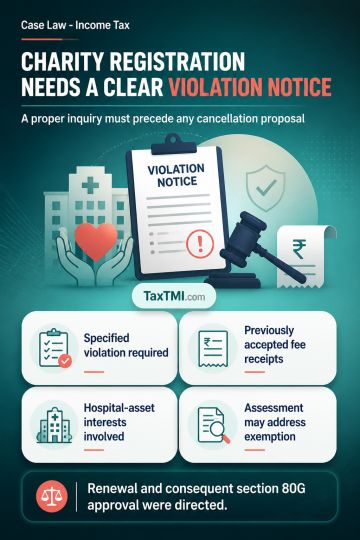
Charitable trust registration requires a specified-violation notice; settled cash deposits and related-party payments did not justify cancellation or ...
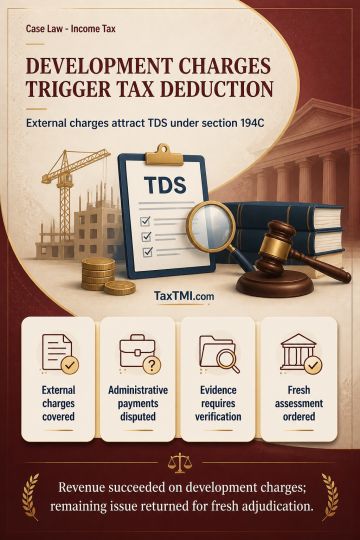
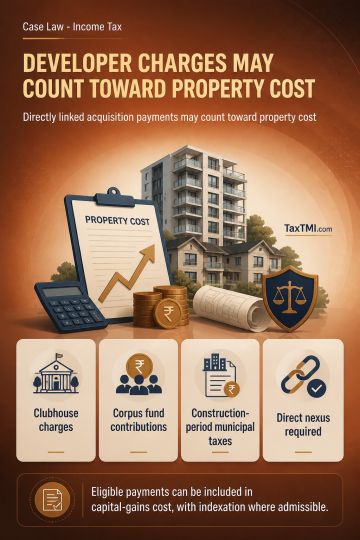
External development charges trigger TDS under section 194C, while disputed administrative payments require factual verification and fresh adjudicatio...
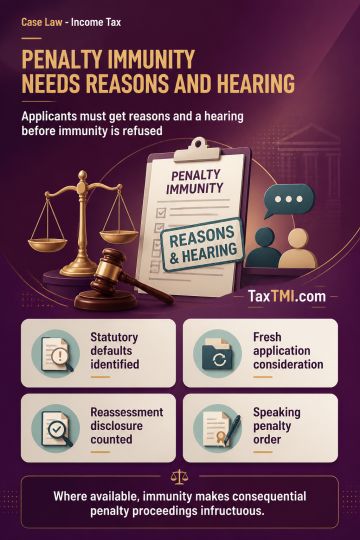
Section 270AA penalty immunity requires identified statutory defaults and a hearing before rejection; reassessment disclosure may constitute under-rep...
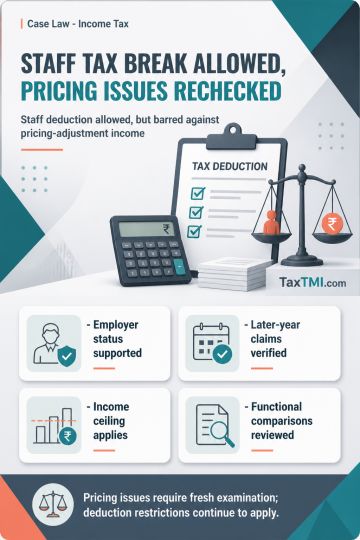
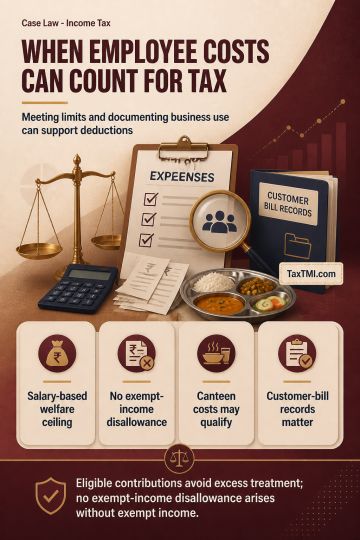
Section 80JJAA employee-cost deduction allowed for deployed staff but barred against transfer-pricing income enhancement, with pricing issues remanded...
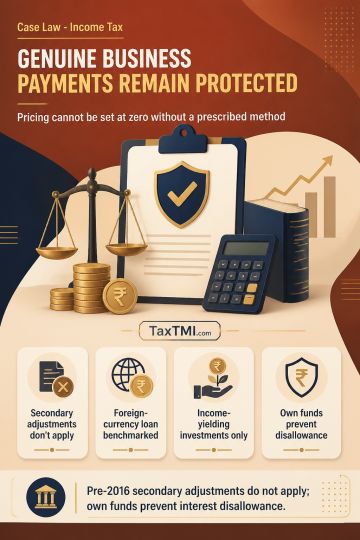
Transfer-pricing methodology protects commercially genuine associated-enterprise payments, while pre-2016 secondary adjustments and related notional i...
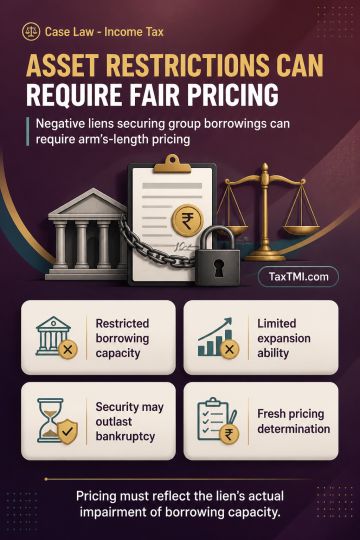
Negative liens over operating assets can constitute international transactions requiring arm's-length pricing reflecting restricted borrowing and expa...
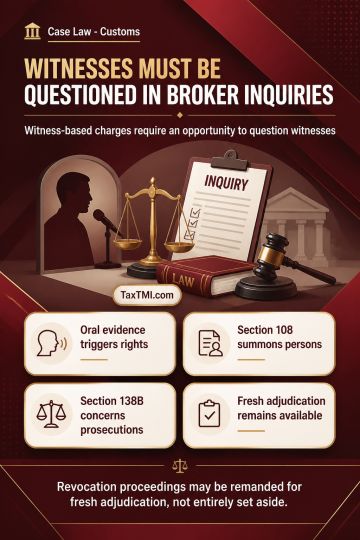
Cross-examination rights in Customs Broker revocation inquiries require witness examination; procedural denial may be cured through fresh adjudication...
Regulator permits Category I and II funds to offer co-investment via separate co-investment schemes (CIVs) within the fund framework, alongside existing portfolio-manager routes. CIVs must use separate bank/demat accounts and ring-fence assets; managers must file a shelf placement memorandum detailing terms and governance. An investor's co-investment across CIVs in an investee is capped at three times their contribution via the affiliated fund, except for multilateral/bilateral development financiers, state industrial development corporations, and government-owned/controlled entities (including central banks and sovereign wealth funds). CIVs cannot leverage or borrow; investors hold pro rata rights (subject to carried interest to sponsor/manager); costs are shared pro rata. Implementation standards must be adopted and compliance reported; immediate effect.
Regulator permits Category I and II funds to offer co-investment via separate co-investment schemes (CIVs) within the fund framework, alongside existing portfolio-manager routes. CIVs must use separate bank/demat accounts and ring-fence assets; managers must file a shelf placement memorandum detailing terms and governance. An investor's co-investment across CIVs in an investee is capped at three times their contribution via the affiliated fund, except for multilateral/bilateral development financiers, state industrial development corporations, and government-owned/controlled entities (including central banks and sovereign wealth funds). CIVs cannot leverage or borrow; investors hold pro rata rights (subject to carried interest to sponsor/manager); costs are shared pro rata. Implementation standards must be adopted and compliance reported; immediate effect.
Note: It is a system-generated summary and is for quick reference only.
 TaxTMI
  TaxTMI
 of 4828





 Join Channel


