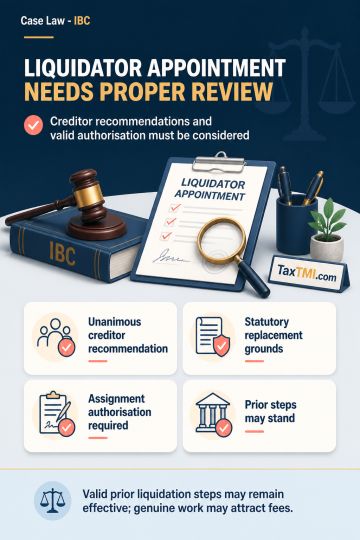
Liquidator appointment under Section 34 requires consideration of creditor recommendations, valid professional authorisation, and preservation of vali...
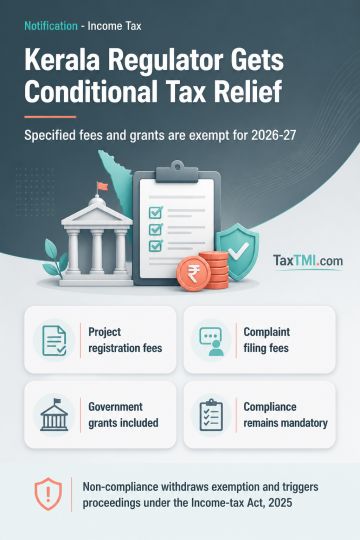
Income-tax exemption for specified regulatory fees and government grants applies subject to non-commercial activity and continuing compliance conditio...
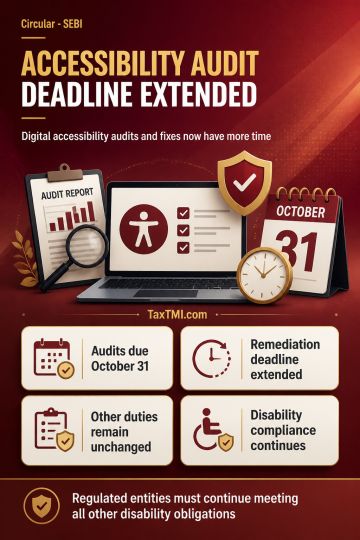
Digital accessibility audit and remediation deadlines extended, while all other disability-compliance obligations for regulated entities remain unchan...
The HC dismissed the writ petition seeking condonation of delay for filing an appeal under Section 107 of the Act, holding that the statutory limitation is absolute and not extendable by the writ court or by application of Section 5 of the Limitation Act. The court reiterated that the Act constitutes a self-contained code with an inbuilt limitation mechanism, thereby implicitly excluding the Limitation Act's extension power. The appellate forum and the prescribed statutory procedure are the sole remedy for challenge; equitable relief to condone delay beyond the statutory period is unavailable. Accordingly, the petitioner's delay was incurable and the petition was dismissed.
The HC dismissed the writ petition seeking condonation of delay for filing an appeal under Section 107 of the Act, holding that the statutory limitation is absolute and not extendable by the writ court or by application of Section 5 of the Limitation Act. The court reiterated that the Act constitutes a self-contained code with an inbuilt limitation mechanism, thereby implicitly excluding the Limitation Act's extension power. The appellate forum and the prescribed statutory procedure are the sole remedy for challenge; equitable relief to condone delay beyond the statutory period is unavailable. Accordingly, the petitioner's delay was incurable and the petition was dismissed.
Note: It is a system-generated summary and is for quick reference only.
 TaxTMI
 of 4805




 Join Channel


 TaxTMI