Business expenditure deduction requires proof of genuine commission payments and commercial allowability; turnover growth alone cannot validate the cl...
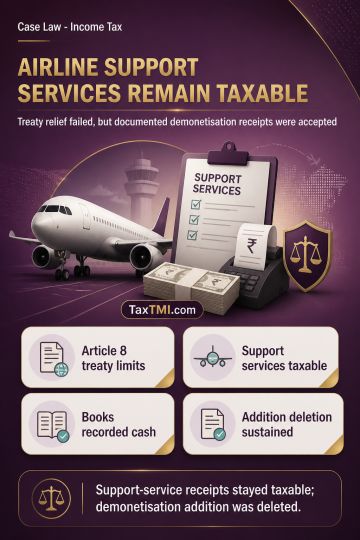
Article 8 treaty coverage excluded third-party airline support services, while documented demonetisation cash receipts remained accepted business inco...
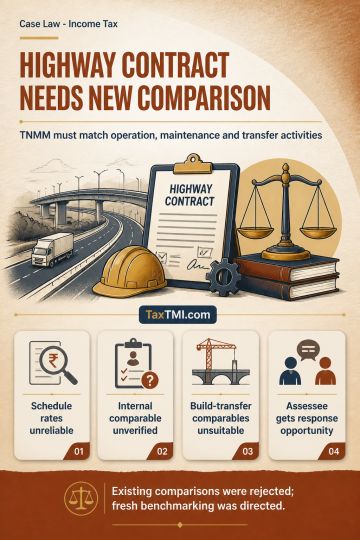
Functional comparability under TNMM requires highway contract benchmarks to reflect operation, maintenance and transfer activities, requiring fresh be...
The AAR held that the Applicant is not entitled to input tax credit for GST paid on fire-fighting systems and public-health equipment installed as part of a new factory. The installations were characterized as permanently affixed to immovable property and thus not "plant and machinery," bringing the supply within the embargoes of s.17(5)(c) and, alternatively, s.17(5)(d) of the CGST/TNGST Act, 2017; GST attributable to the composite works contract is therefore non-creditable. Because ITC denial on the specific contract is dispositive, the AAR declined to adjudicate the ancillary question on the timing for availing ITC against supplier "advance component" invoices.
The AAR held that the Applicant is not entitled to input tax credit for GST paid on fire-fighting systems and public-health equipment installed as part of a new factory. The installations were characterized as permanently affixed to immovable property and thus not "plant and machinery," bringing the supply within the embargoes of s.17(5)(c) and, alternatively, s.17(5)(d) of the CGST/TNGST Act, 2017; GST attributable to the composite works contract is therefore non-creditable. Because ITC denial on the specific contract is dispositive, the AAR declined to adjudicate the ancillary question on the timing for availing ITC against supplier "advance component" invoices.
Note: It is a system-generated summary and is for quick reference only.
 TaxTMI
 of 4803










 Join Channel


 TaxTMI