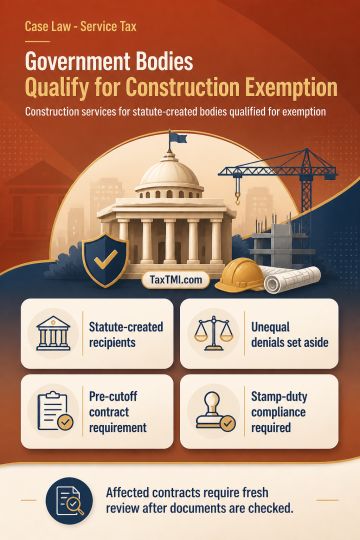
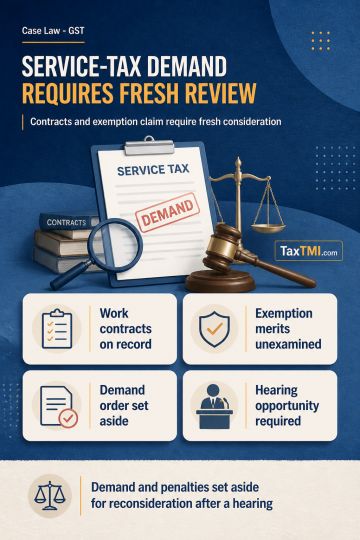
Governmental authority status supports construction-service exemption, while pre-cutoff contract and stamp-duty compliance requires verification on re...
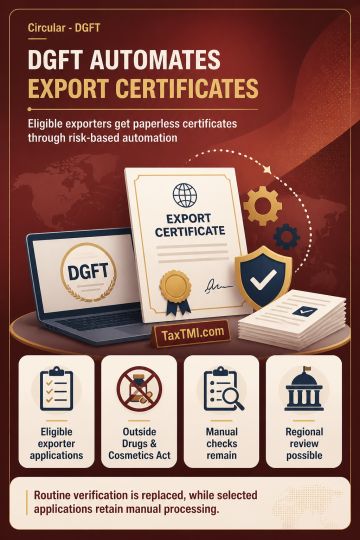
Automated Free Sale and Commerce Certificates enable paperless processing while retaining risk-based manual verification for selected exporter applica...
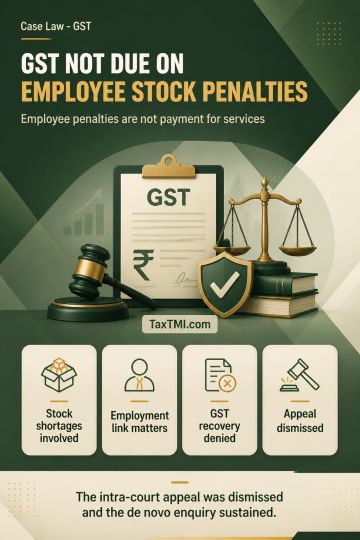
Employee stock-shortage penalties do not constitute consideration for services, preventing GST collection under Schedule II in employment relationship...
HC allowed the appeal, setting aside the orders of the AO, CIT(A) and Tribunal, and held that the disputed amounts constitute actual bad debts written off (not mere provisions) and therefore qualify for deduction under s.36(1)(vii) where supported by the balance sheet entries. The court emphasized the accounting distinction between a write-off (debit to P&L and credit to sundry debtors) and a provision (credit to provisions/liabilities). It further noted that recoveries, if any, are taxable under s.41(4) and observed that the taxpayer had already declared and paid tax on the subsequent recoveries; accordingly the revenue's disallowance was quashed.
HC allowed the appeal, setting aside the orders of the AO, CIT(A) and Tribunal, and held that the disputed amounts constitute actual bad debts written off (not mere provisions) and therefore qualify for deduction under s.36(1)(vii) where supported by the balance sheet entries. The court emphasized the accounting distinction between a write-off (debit to P&L and credit to sundry debtors) and a provision (credit to provisions/liabilities). It further noted that recoveries, if any, are taxable under s.41(4) and observed that the taxpayer had already declared and paid tax on the subsequent recoveries; accordingly the revenue's disallowance was quashed.
Note: It is a system-generated summary and is for quick reference only.
 TaxTMI
  TaxTMI
 of 4828






 Join Channel


