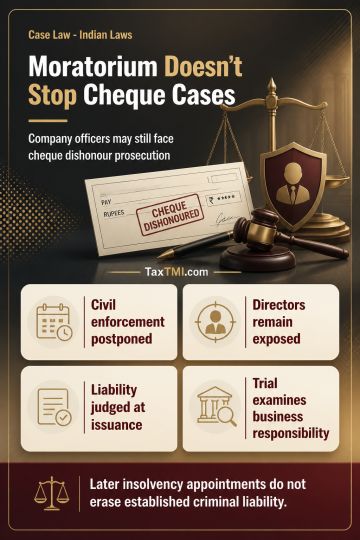
Insolvency moratorium does not shield company officers from cheque dishonour prosecution for liability arising before corporate insolvency proceedings...
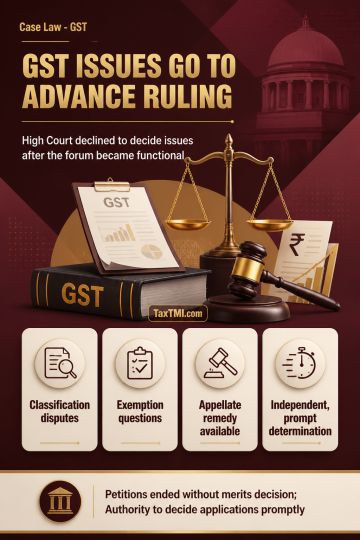
Advance-ruling mechanism governs pending GST classification, exemption and taxability disputes, limiting writ review once the specialised forum functi...
The HC dismissed the writ petition, holding that notwithstanding procedural objections including alleged violation of natural justice, an unreasoned and unsigned order and breaches of Rule 26(3) and Rule 142(1) of the BGST/CGST Rules, the impugned order emanated from the petitioner's unequivocal admission of wrongfully availing and utilising input tax credit for 2017-18. The court found no substantive prejudice requiring judicial interference: the petitioner had filed a reply and no mandatory personal hearing omission vitiated the outcome. The Proper Officer merely raised a demand for interest under s.50(3) of the BGST Act, 2017; no penalty was imposed. Exercise of writ jurisdiction was declined and the petition was dismissed.
The HC dismissed the writ petition, holding that notwithstanding procedural objections including alleged violation of natural justice, an unreasoned and unsigned order and breaches of Rule 26(3) and Rule 142(1) of the BGST/CGST Rules, the impugned order emanated from the petitioner's unequivocal admission of wrongfully availing and utilising input tax credit for 2017-18. The court found no substantive prejudice requiring judicial interference: the petitioner had filed a reply and no mandatory personal hearing omission vitiated the outcome. The Proper Officer merely raised a demand for interest under s.50(3) of the BGST Act, 2017; no penalty was imposed. Exercise of writ jurisdiction was declined and the petition was dismissed.
Note: It is a system-generated summary and is for quick reference only.
 TaxTMI
 of 4805





 Join Channel


 TaxTMI
