Opportunity to respond to jurisdictional reports is mandatory before customs settlement duty enhancement; connected applications require consistent ad...
Specific customs headings for scaffolding components prevail over general classification, invalidating misclassification proceedings and enabling with...
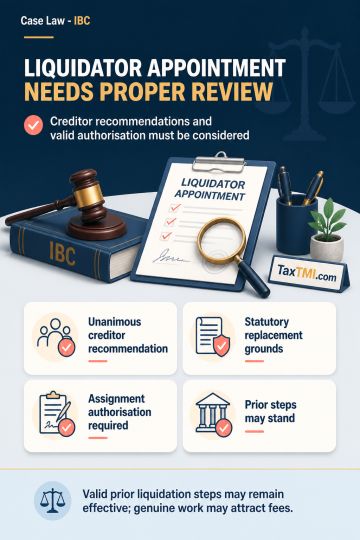
Liquidator appointment under Section 34 requires consideration of creditor recommendations, valid professional authorisation, and preservation of vali...
Income-tax exemption for specified regulatory fees and government grants applies subject to non-commercial activity and continuing compliance conditio...
Digital accessibility audit and remediation deadlines extended, while all other disability-compliance obligations for regulated entities remain unchan...
Page of 4803
Press 'Enter' after typing page number.
621 to 640 of 96047 Results
❮
❯
❯❯
0 / 200
Expand Note
Add to Folder
No Folders have been created
+
Are you sure you want to delete "My most important" ?
The HC dismissed the writ petition challenging the impugned order alleging fraudulent availment of Input Tax Credit (ITC) by multiple parties. The Court noted that the Petitioner's reply to the show cause notice (SCN) may not have been duly considered, raising a potential natural justice issue. However, given the complexity involving numerous transactions and multiple noticees, the Court held that detailed factual examination is inappropriate under writ jurisdiction. The Court emphasized that the Petitioner should pursue statutory appellate remedies instead of seeking relief via writ petition. Consequently, the petition was dismissed without adjudicating the merits of the alleged fraudulent ITC claims or penalties imposed.
The HC dismissed the writ petition challenging the impugned order alleging fraudulent availment of Input Tax Credit (ITC) by multiple parties. The Court noted that the Petitioner's reply to the show cause notice (SCN) may not have been duly considered, raising a potential natural justice issue. However, given the complexity involving numerous transactions and multiple noticees, the Court held that detailed factual examination is inappropriate under writ jurisdiction. The Court emphasized that the Petitioner should pursue statutory appellate remedies instead of seeking relief via writ petition. Consequently, the petition was dismissed without adjudicating the merits of the alleged fraudulent ITC claims or penalties imposed.
Note: It is a system-generated summary and is for quick reference only.
 TaxTMI
 of 4803















 Join Channel


 TaxTMI