Opportunity to respond to jurisdictional reports is mandatory before customs settlement duty enhancement; connected applications require consistent ad...
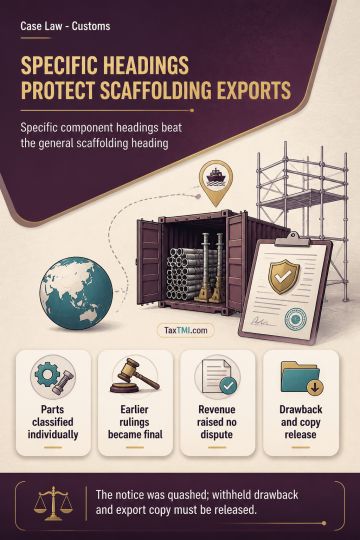
Specific customs headings for scaffolding components prevail over general classification, invalidating misclassification proceedings and enabling with...
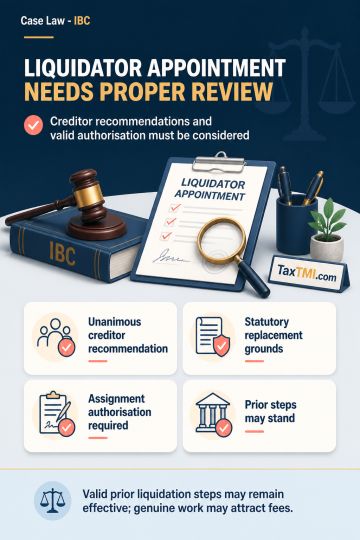
Liquidator appointment under Section 34 requires consideration of creditor recommendations, valid professional authorisation, and preservation of vali...
The HC quashed the penalty imposed for the delayed updating of the e-way bill, as the petitioner generated and produced an updated e-way bill before the seizure order was passed. The court found no evidence of intent to evade tax, a necessary element for penalty imposition under the GST Act. Physical verification revealed no discrepancies in the goods, and the petitioner's explanation of an accident causing delay was accepted. The HC held that mere expiry of the initial e-way bill does not constitute a contravention if a fresh e-way bill is generated in time. The impugned orders imposing penalties were set aside, and the writ petitions were allowed.
The HC quashed the penalty imposed for the delayed updating of the e-way bill, as the petitioner generated and produced an updated e-way bill before the seizure order was passed. The court found no evidence of intent to evade tax, a necessary element for penalty imposition under the GST Act. Physical verification revealed no discrepancies in the goods, and the petitioner's explanation of an accident causing delay was accepted. The HC held that mere expiry of the initial e-way bill does not constitute a contravention if a fresh e-way bill is generated in time. The impugned orders imposing penalties were set aside, and the writ petitions were allowed.
Note: It is a system-generated summary and is for quick reference only.
 TaxTMI
 of 4805












 Join Channel


 TaxTMI
