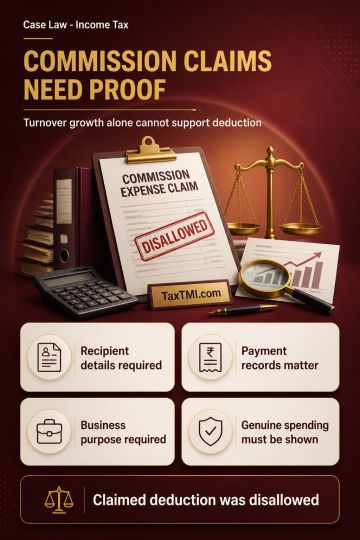
Business expenditure deduction requires proof of genuine commission payments and commercial allowability; turnover growth alone cannot validate the cl...
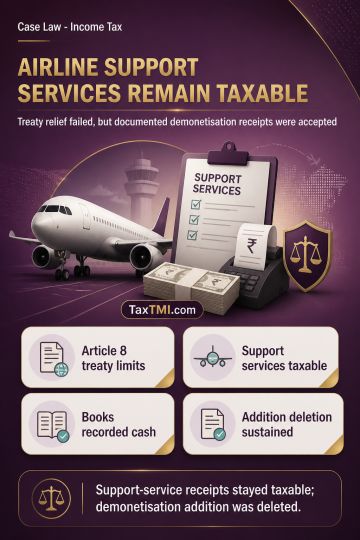
Article 8 treaty coverage excluded third-party airline support services, while documented demonetisation cash receipts remained accepted business inco...
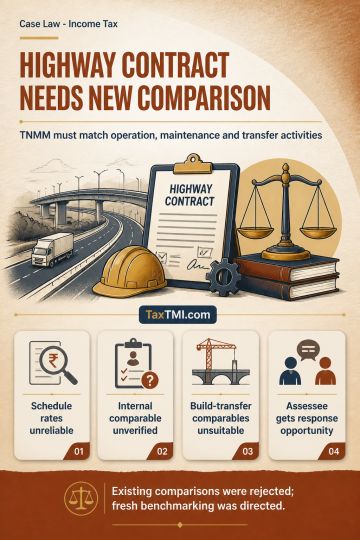
Functional comparability under TNMM requires highway contract benchmarks to reflect operation, maintenance and transfer activities, requiring fresh be...
The HC quashed the penalty imposed for the delayed updating of the e-way bill, as the petitioner generated and produced an updated e-way bill before the seizure order was passed. The court found no evidence of intent to evade tax, a necessary element for penalty imposition under the GST Act. Physical verification revealed no discrepancies in the goods, and the petitioner's explanation of an accident causing delay was accepted. The HC held that mere expiry of the initial e-way bill does not constitute a contravention if a fresh e-way bill is generated in time. The impugned orders imposing penalties were set aside, and the writ petitions were allowed.
The HC quashed the penalty imposed for the delayed updating of the e-way bill, as the petitioner generated and produced an updated e-way bill before the seizure order was passed. The court found no evidence of intent to evade tax, a necessary element for penalty imposition under the GST Act. Physical verification revealed no discrepancies in the goods, and the petitioner's explanation of an accident causing delay was accepted. The HC held that mere expiry of the initial e-way bill does not constitute a contravention if a fresh e-way bill is generated in time. The impugned orders imposing penalties were set aside, and the writ petitions were allowed.
Note: It is a system-generated summary and is for quick reference only.
 TaxTMI
 of 4805








 Join Channel


 TaxTMI