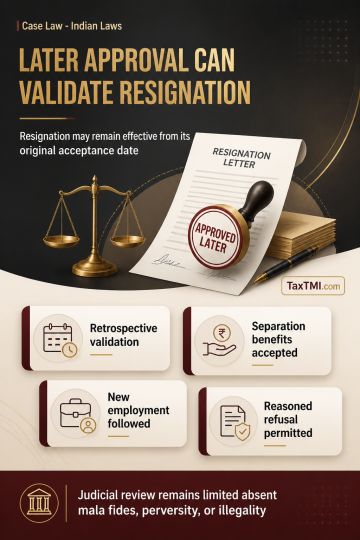
Ratification of resignation acceptance validates separation retrospectively, while withdrawal may be refused through reasoned administrative discretio...
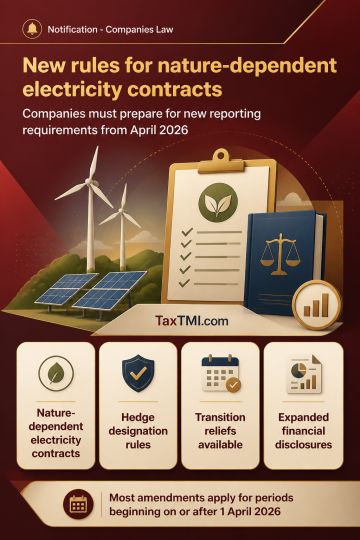
Nature-dependent electricity contracts receive new Ind AS accounting, hedge designation, transition and financial-statement disclosure requirements fr...
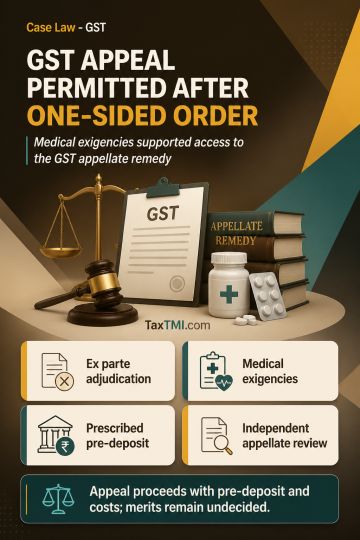
Alternative GST remedy permitted protective writ intervention for ex parte adjudication, preserving independent appellate review of input tax credit d...
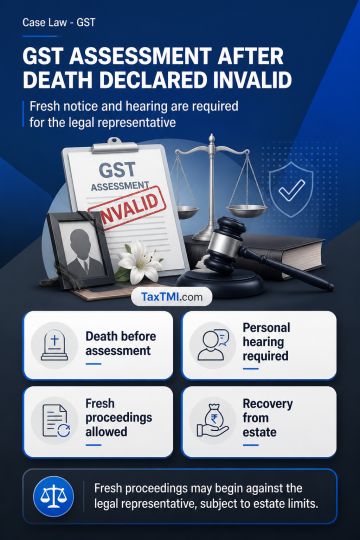
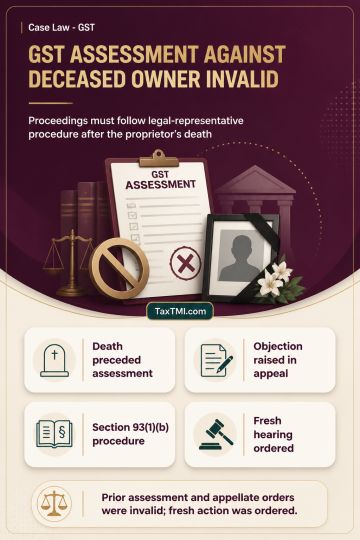
Assessment against deceased sole proprietor requires proceedings against the legal representative, rendering prior assessment and appellate orders inv...
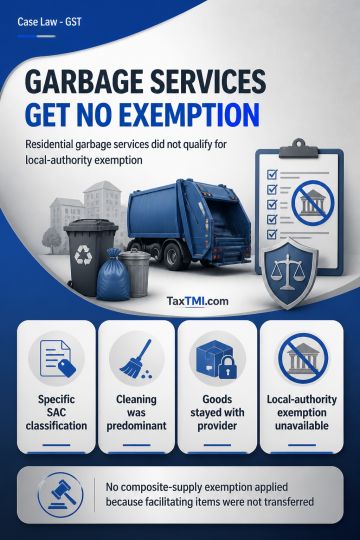
Residential waste collection classification under SAC 999423 defeats composite-supply exemption where facilitating goods are not transferred to the lo...
The HC dismissed the writ petition filed beyond the prescribed limitation period for appeal under Section 107 of the CGST Act, 2017, holding that service by registered email constitutes valid service, triggering the limitation period. The court reaffirmed that statutory limitation periods are absolute and not extendable by applying Section 5 of the Limitation Act or through writ jurisdiction under Article 226. The petitioner failed to demonstrate sufficient cause for delay or explain the non-filing within time. The HC emphasized adherence to the exclusive statutory appellate mechanism, refusing to condone delay or entertain the petition on grounds neither involving gross injustice nor patent illegality. Consequently, allowing the petition would circumvent the statutory appellate process and render the limitation provision ineffective. The petition was rejected in limine.
The HC dismissed the writ petition filed beyond the prescribed limitation period for appeal under Section 107 of the CGST Act, 2017, holding that service by registered email constitutes valid service, triggering the limitation period. The court reaffirmed that statutory limitation periods are absolute and not extendable by applying Section 5 of the Limitation Act or through writ jurisdiction under Article 226. The petitioner failed to demonstrate sufficient cause for delay or explain the non-filing within time. The HC emphasized adherence to the exclusive statutory appellate mechanism, refusing to condone delay or entertain the petition on grounds neither involving gross injustice nor patent illegality. Consequently, allowing the petition would circumvent the statutory appellate process and render the limitation provision ineffective. The petition was rejected in limine.
Note: It is a system-generated summary and is for quick reference only.
 TaxTMI
 of 4796






 Join Channel


 TaxTMI
