Transaction value rejection requires reliable corroboration; refundable VAT is excluded and temporary registration does not defeat new-vehicle exempti...
Appellate jurisdiction remains available where a wrist-worn gold ornament cannot conclusively be characterised as imported baggage at the preliminary ...
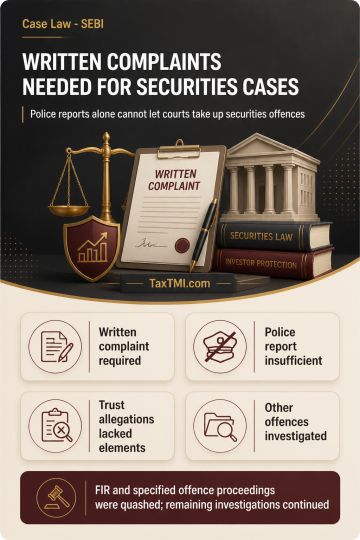
Written complaint requirement bars cognizance on police reports for securities offences, while unsupported breach of trust and cheating allegations fa...
The HC dismissed the writ petition filed beyond the prescribed limitation period for appeal under Section 107 of the CGST Act, 2017, holding that service by registered email constitutes valid service, triggering the limitation period. The court reaffirmed that statutory limitation periods are absolute and not extendable by applying Section 5 of the Limitation Act or through writ jurisdiction under Article 226. The petitioner failed to demonstrate sufficient cause for delay or explain the non-filing within time. The HC emphasized adherence to the exclusive statutory appellate mechanism, refusing to condone delay or entertain the petition on grounds neither involving gross injustice nor patent illegality. Consequently, allowing the petition would circumvent the statutory appellate process and render the limitation provision ineffective. The petition was rejected in limine.
The HC dismissed the writ petition filed beyond the prescribed limitation period for appeal under Section 107 of the CGST Act, 2017, holding that service by registered email constitutes valid service, triggering the limitation period. The court reaffirmed that statutory limitation periods are absolute and not extendable by applying Section 5 of the Limitation Act or through writ jurisdiction under Article 226. The petitioner failed to demonstrate sufficient cause for delay or explain the non-filing within time. The HC emphasized adherence to the exclusive statutory appellate mechanism, refusing to condone delay or entertain the petition on grounds neither involving gross injustice nor patent illegality. Consequently, allowing the petition would circumvent the statutory appellate process and render the limitation provision ineffective. The petition was rejected in limine.
Note: It is a system-generated summary and is for quick reference only.
 TaxTMI
 of 4798






 Join Channel


 TaxTMI
