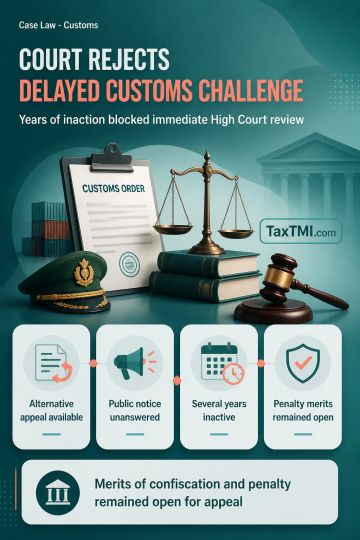
Alternative statutory remedy and unexplained delay barred writ review of customs confiscation adjudication, leaving merits for appellate consideration...
Authorised courier due diligence protects against penalties where declared exports conceal prohibited goods despite proper documentation and customs p...
Customs-controlled container movement now extends to DP World facilities, subject to segregation, inspections, reconciliation, and EXIM cargo priority...
The ITAT set aside the revision order passed by the PCIT under section 263, finding multiple procedural and substantive infirmities. The PCIT violated principles of natural justice by failing to serve show-cause notices and denying the assessee an opportunity to be heard. The notices were not available on the Income Tax portal, indicating non-service. Additionally, the PCIT erroneously relied on figures pertaining to a sister concern rather than the assessee, leading to incorrect cancellation of the assessment order. The revision order was thus based on flawed facts, lacked proper application of mind, and was prejudicial to the assessee. The ITAT held that the Pr. CIT failed to establish that the assessment order was erroneous or prejudicial to revenue interests under section 263. Consequently, the appeal was allowed, and the revision order was quashed.
The ITAT set aside the revision order passed by the PCIT under section 263, finding multiple procedural and substantive infirmities. The PCIT violated principles of natural justice by failing to serve show-cause notices and denying the assessee an opportunity to be heard. The notices were not available on the Income Tax portal, indicating non-service. Additionally, the PCIT erroneously relied on figures pertaining to a sister concern rather than the assessee, leading to incorrect cancellation of the assessment order. The revision order was thus based on flawed facts, lacked proper application of mind, and was prejudicial to the assessee. The ITAT held that the Pr. CIT failed to establish that the assessment order was erroneous or prejudicial to revenue interests under section 263. Consequently, the appeal was allowed, and the revision order was quashed.
Note: It is a system-generated summary and is for quick reference only.
 TaxTMI
  TaxTMI
 of 4827
















 Join Channel


