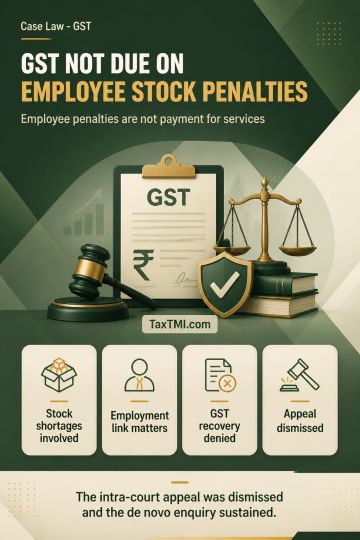
Employee stock-shortage penalties do not constitute consideration for services, preventing GST collection under Schedule II in employment relationship...
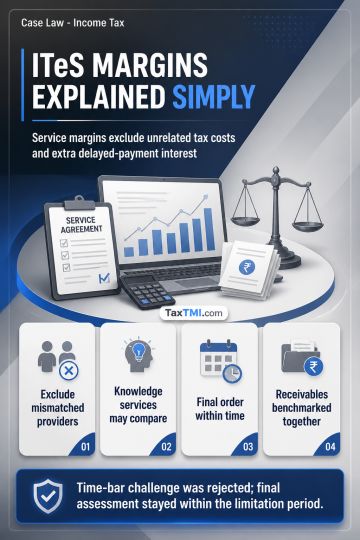
Transfer-pricing treatment of ITeS margins excludes pass-through tax recoveries and separate delayed-receivables interest after working-capital adjust...
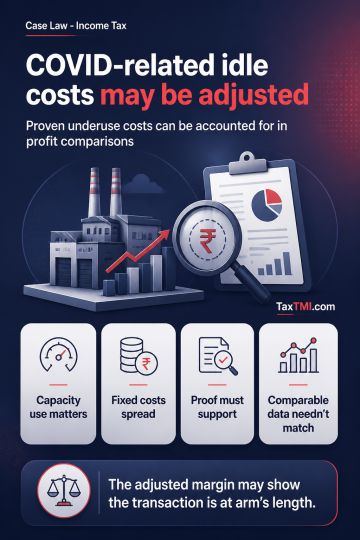
Capacity-utilisation adjustments under TNMM can neutralise substantiated COVID-related idle costs where underutilisation materially affects profitabil...
Page of 4830
Press 'Enter' after typing page number.
181 to 200 of 96587 Results
❮
❯
❯❯
0 / 200
Expand Note
Add to Folder
No Folders have been created
+
Are you sure you want to delete "My most important" ?
The ITAT allowed the assessee's claim for exemption under section 10(23C)(v) despite the failure to file the audit report within the time prescribed under section 139(1), holding that the statutory time limit for audit report submission is not mandatory for denial of exemption. The tribunal emphasized that receipts in the form of offerings to an institution wholly dedicated to religious purposes do not constitute taxable income. The assessee, being a government-controlled entity with accounts approved by the State Assembly, was presumed to have applied the receipts appropriately. Technical non-compliance was dispensed with to uphold fairness in taxation. Consequently, the reassessment orders computing assessable income were set aside, and the exemption under section 10(23C)(v) was granted in full, directing the assessing officer to give effect accordingly.
The ITAT allowed the assessee's claim for exemption under section 10(23C)(v) despite the failure to file the audit report within the time prescribed under section 139(1), holding that the statutory time limit for audit report submission is not mandatory for denial of exemption. The tribunal emphasized that receipts in the form of offerings to an institution wholly dedicated to religious purposes do not constitute taxable income. The assessee, being a government-controlled entity with accounts approved by the State Assembly, was presumed to have applied the receipts appropriately. Technical non-compliance was dispensed with to uphold fairness in taxation. Consequently, the reassessment orders computing assessable income were set aside, and the exemption under section 10(23C)(v) was granted in full, directing the assessing officer to give effect accordingly.
Note: It is a system-generated summary and is for quick reference only.
 TaxTMI
  TaxTMI
 of 4830



 Join Channel


