TNMM functional comparability requires excluding rice manufacturers from a pure Basmati rice trader's benchmark and recognising operating export recei...
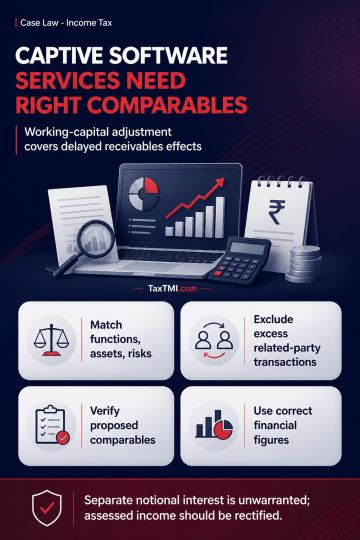
Working-capital adjustment subsumes delayed-receivable effects in TNMM benchmarking of captive software-development services, avoiding separate notion...
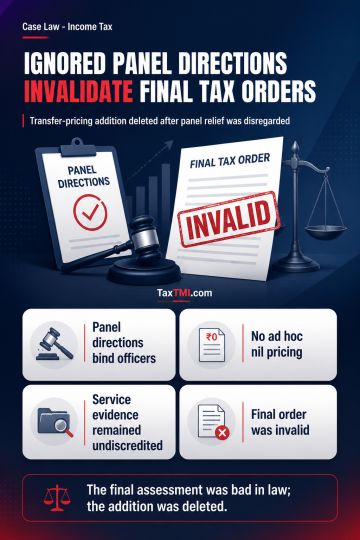
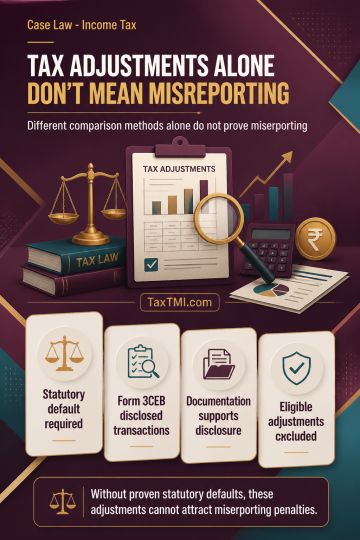
Transfer-pricing comparability requires exclusion of financially illogical super-profit comparables and correction of unsupported annual-report and ma...
Charitable character assessment preserves Section 80G approval despite inclusive spiritual teachings and incidental religious expenditure within the s...
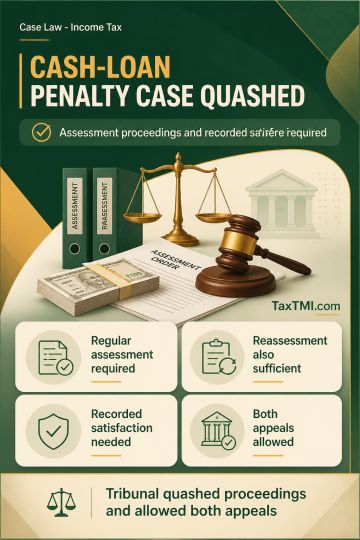
Penalty proceedings for cash-loan acceptance require assessment proceedings and recorded Assessing Officer satisfaction; absent these, the proceedings...
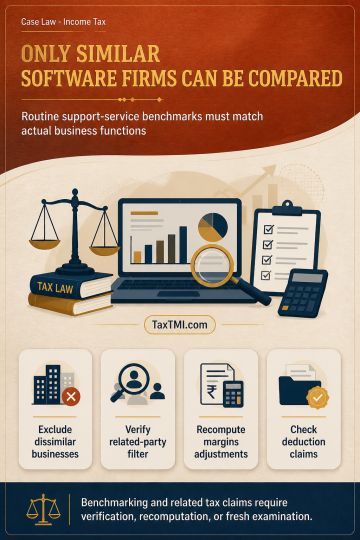
Functional comparability governs software-service benchmarking: dissimilar companies are excluded, while related-party filters, margins and working-ca...
The NCLAT upheld the dismissal of the CIRP petition under Section 9 IBC, emphasizing that the Adjudicating Authority rightly declined to initiate insolvency proceedings due to the existence of a pre-existing dispute concerning the debt. The Tribunal clarified that the mere non-response to a Section 8 notice does not amount to an admission of debt and that the burden lies on the creditor to establish an undisputed default. It further observed that the Adjudicating Authority erred in presuming the existence of the work order and applying the 90-day payment period under Section 10A IBC without sufficient proof. Since the foundational contractual terms remained unascertained, the invocation of CIRP was premature. Consequently, the order dismissing the petition was affirmed without interference, reinforcing that IBC proceedings cannot be used as a debt recovery tool where genuine disputes exist.
The NCLAT upheld the dismissal of the CIRP petition under Section 9 IBC, emphasizing that the Adjudicating Authority rightly declined to initiate insolvency proceedings due to the existence of a pre-existing dispute concerning the debt. The Tribunal clarified that the mere non-response to a Section 8 notice does not amount to an admission of debt and that the burden lies on the creditor to establish an undisputed default. It further observed that the Adjudicating Authority erred in presuming the existence of the work order and applying the 90-day payment period under Section 10A IBC without sufficient proof. Since the foundational contractual terms remained unascertained, the invocation of CIRP was premature. Consequently, the order dismissing the petition was affirmed without interference, reinforcing that IBC proceedings cannot be used as a debt recovery tool where genuine disputes exist.
Note: It is a system-generated summary and is for quick reference only.
 TaxTMI
  TaxTMI
 of 4830













 Join Channel


