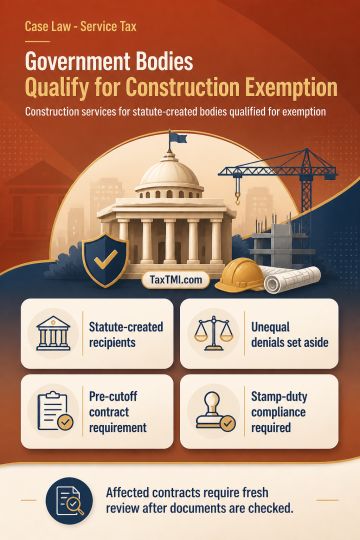
Governmental authority status supports construction-service exemption, while pre-cutoff contract and stamp-duty compliance requires verification on re...
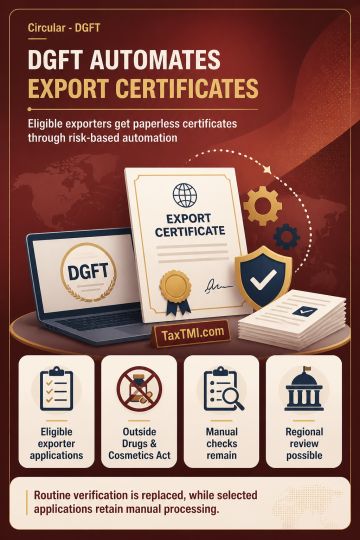
Automated Free Sale and Commerce Certificates enable paperless processing while retaining risk-based manual verification for selected exporter applica...
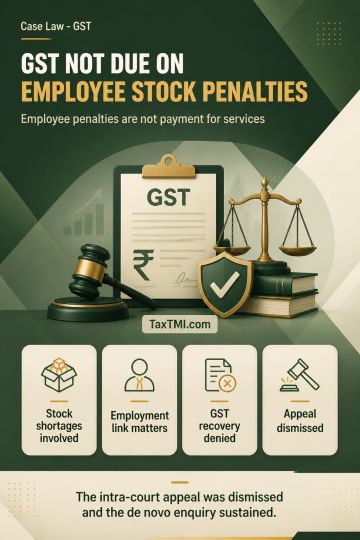
Employee stock-shortage penalties do not constitute consideration for services, preventing GST collection under Schedule II in employment relationship...
The ITAT held that despite the delay in filing Form 67 beyond the due date under section 139(1), the assessee was entitled to claim Foreign Tax Credit as the amount was disclosed in the original return. The delay was attributed to the COVID-19 pandemic and travel restrictions, constituting a reasonable cause beyond the assessee's control. The Tribunal emphasized that filing Form 67 is directory, not mandatory, and that the DTAA provisions prevail over the Act and Rules. Consequently, the assessee could invoke section 154 for rectification despite the original grievance lying against the intimation under section 143(1). On merits, the ITAT allowed the Foreign Tax Credit benefit, directing the revenue to grant the same.
The ITAT held that despite the delay in filing Form 67 beyond the due date under section 139(1), the assessee was entitled to claim Foreign Tax Credit as the amount was disclosed in the original return. The delay was attributed to the COVID-19 pandemic and travel restrictions, constituting a reasonable cause beyond the assessee's control. The Tribunal emphasized that filing Form 67 is directory, not mandatory, and that the DTAA provisions prevail over the Act and Rules. Consequently, the assessee could invoke section 154 for rectification despite the original grievance lying against the intimation under section 143(1). On merits, the ITAT allowed the Foreign Tax Credit benefit, directing the revenue to grant the same.
Note: It is a system-generated summary and is for quick reference only.
 TaxTMI
  TaxTMI
 of 4828








 Join Channel


