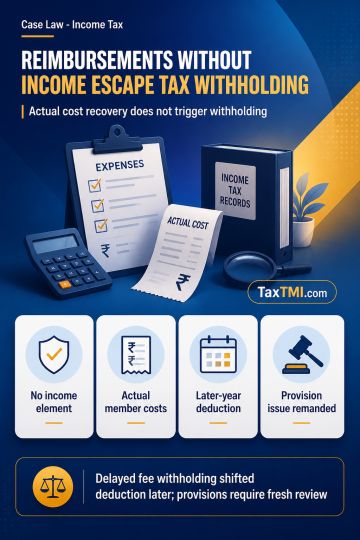
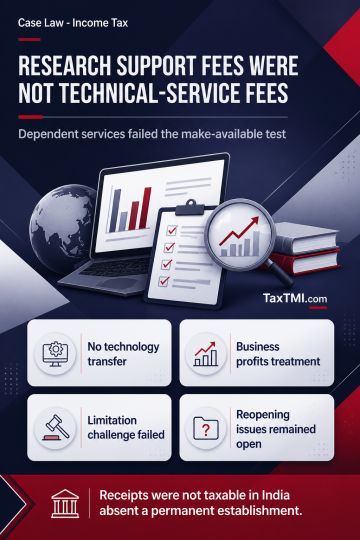
Pure reimbursement without income element escapes tax withholding, while delayed withholding and unsupported provisions face deferred or renewed scrut...
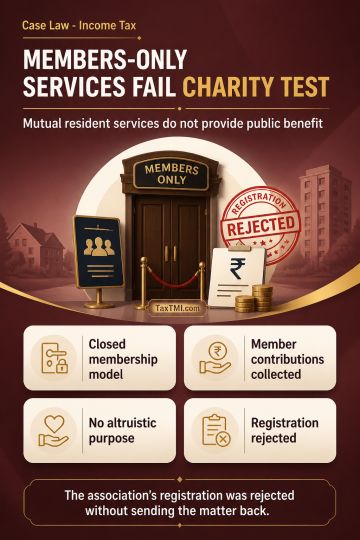
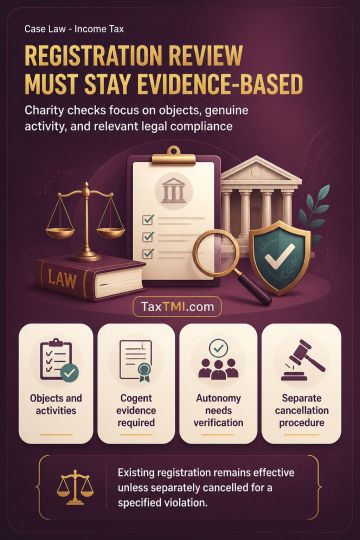
Public benefit requirement defeats charitable registration where residents' association services are reciprocal, member-only facilities governed by mu...
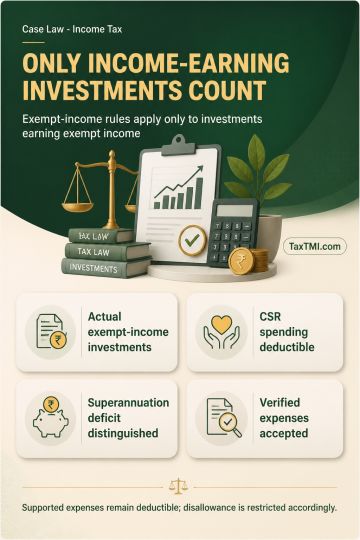
Exempt-income expenditure disallowance is confined to investments that actually generated exempt income, while supported business expenses remain dedu...
Objective characteristics and principal use govern mining-tyre classification, while fresh advance ruling applications may rely on additional technica...
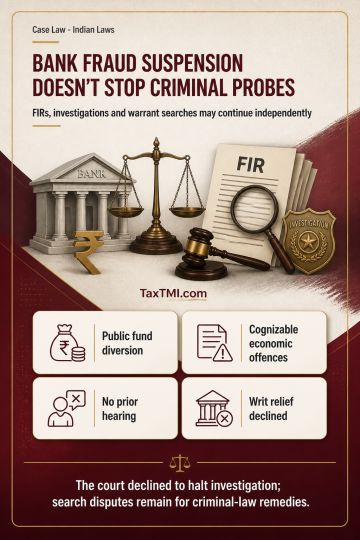
Administrative fraud classification suspension does not halt independent criminal investigation or warrant-based searches into alleged economic offenc...
Page of 4803
Press 'Enter' after typing page number.
761 to 780 of 96046 Results
❮
❯
❯❯
0 / 200
Expand Note
Add to Folder
No Folders have been created
+
Are you sure you want to delete "My most important" ?
The SC held that criminal proceedings initiated by the complainant for recovery of unpaid sale consideration do not constitute criminal breach of trust under Section 406 IPC, as mere sale transactions do not amount to entrustment of goods. The Court criticized the High Court for permitting criminal proceedings in a pure civil dispute, emphasizing that such resort amounts to abuse of process. The SC underscored established jurisprudence clarifying the distinction between civil claims and criminal breach of trust. Observations by the High Court suggesting criminal prosecution as a substitute for civil recovery were condemned. Consequently, the SC set aside the impugned High Court order and remanded the matter for fresh consideration of the Criminal Miscellaneous Application, partially allowing the appeal.
The SC held that criminal proceedings initiated by the complainant for recovery of unpaid sale consideration do not constitute criminal breach of trust under Section 406 IPC, as mere sale transactions do not amount to entrustment of goods. The Court criticized the High Court for permitting criminal proceedings in a pure civil dispute, emphasizing that such resort amounts to abuse of process. The SC underscored established jurisprudence clarifying the distinction between civil claims and criminal breach of trust. Observations by the High Court suggesting criminal prosecution as a substitute for civil recovery were condemned. Consequently, the SC set aside the impugned High Court order and remanded the matter for fresh consideration of the Criminal Miscellaneous Application, partially allowing the appeal.
Note: It is a system-generated summary and is for quick reference only.
 TaxTMI
 of 4803







 Join Channel


 TaxTMI