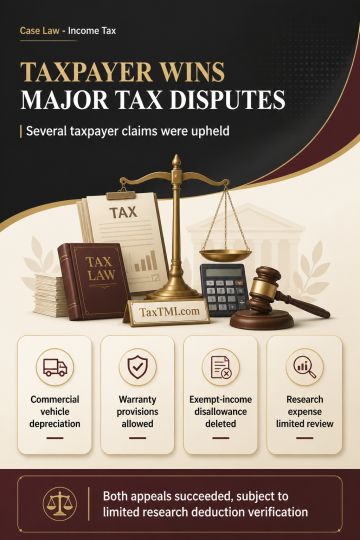
Commercial vehicle depreciation, scientifically determined warranty provisions and exempt-income disallowances were resolved in favour of the taxpayer...
Inherited property sale proceeds require capital-gains treatment where ownership is supported by evidence, not suspicion or unverified signature doubt...
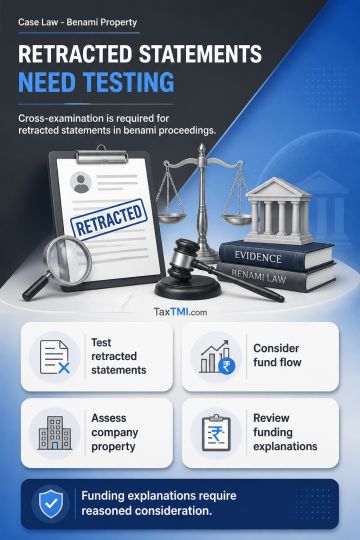
Cross-examination of retracted statements is essential where foundational evidence supports a benami allegation and documented funding explanations re...
Capital-goods exemption covers plant-modernisation accessories, while the import restriction applies only to earlier capital-goods components and spar...
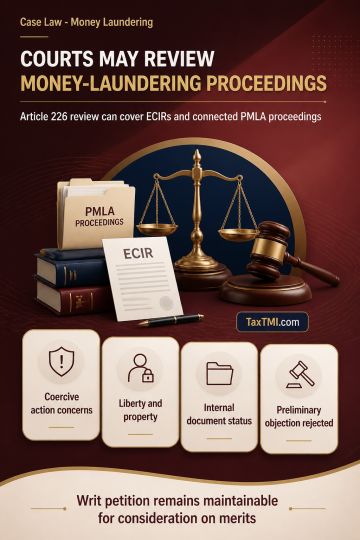
Constitutional judicial review permits challenges to ECIRs and connected money-laundering proceedings where coercive action affects fundamental intere...
Page of 4800
Press 'Enter' after typing page number.
421 to 440 of 95999 Results
❮
❯
❯❯
0 / 200
Expand Note
Add to Folder
No Folders have been created
+
Are you sure you want to delete "My most important" ?
The SC held that criminal proceedings initiated by the complainant for recovery of unpaid sale consideration do not constitute criminal breach of trust under Section 406 IPC, as mere sale transactions do not amount to entrustment of goods. The Court criticized the High Court for permitting criminal proceedings in a pure civil dispute, emphasizing that such resort amounts to abuse of process. The SC underscored established jurisprudence clarifying the distinction between civil claims and criminal breach of trust. Observations by the High Court suggesting criminal prosecution as a substitute for civil recovery were condemned. Consequently, the SC set aside the impugned High Court order and remanded the matter for fresh consideration of the Criminal Miscellaneous Application, partially allowing the appeal.
The SC held that criminal proceedings initiated by the complainant for recovery of unpaid sale consideration do not constitute criminal breach of trust under Section 406 IPC, as mere sale transactions do not amount to entrustment of goods. The Court criticized the High Court for permitting criminal proceedings in a pure civil dispute, emphasizing that such resort amounts to abuse of process. The SC underscored established jurisprudence clarifying the distinction between civil claims and criminal breach of trust. Observations by the High Court suggesting criminal prosecution as a substitute for civil recovery were condemned. Consequently, the SC set aside the impugned High Court order and remanded the matter for fresh consideration of the Criminal Miscellaneous Application, partially allowing the appeal.
Note: It is a system-generated summary and is for quick reference only.
 TaxTMI
 of 4800














 Join Channel


 TaxTMI
