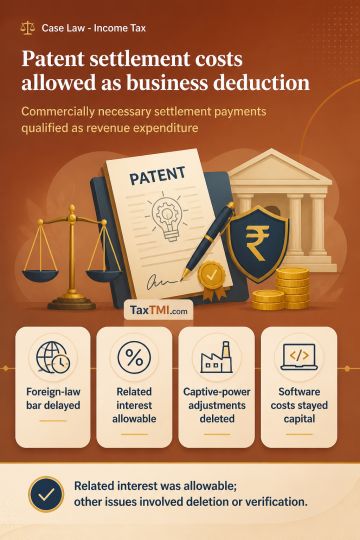
Patent-settlement expenditure treated as commercially expedient revenue outlay, with foreign-law restrictions inapplicable before the prospective amen...
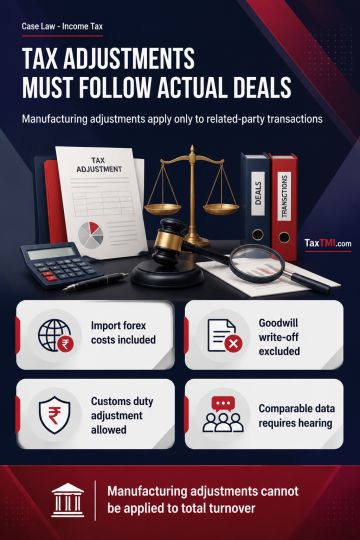
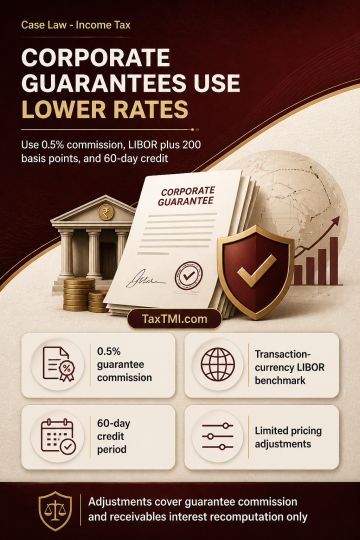
International transaction benchmarking restricts transfer pricing adjustments to associated-enterprise dealings, while functional comparability govern...
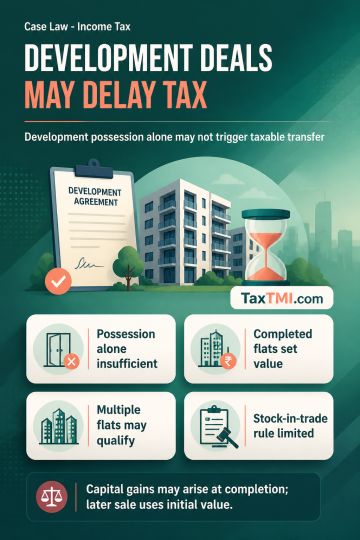
Joint development agreements defer taxable transfer where possession lacks part performance, while completed flats determine consideration and exempti...
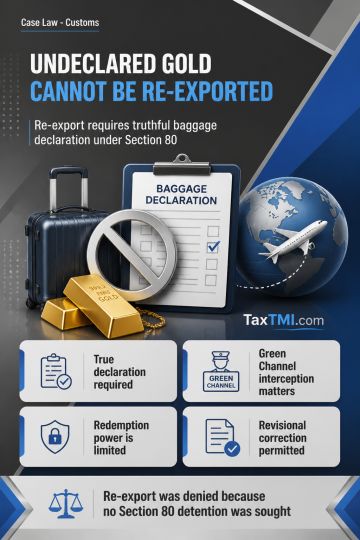
Passenger baggage re-export requires true declaration and cannot be granted indirectly through discretionary redemption of undeclared prohibited goods...
Page of 4803
Press 'Enter' after typing page number.
501 to 520 of 96046 Results
❮
❯
❯❯
0 / 200
Expand Note
Add to Folder
No Folders have been created
+
Are you sure you want to delete "My most important" ?
The HC upheld the levy of penalty under Section 129(1)(b) of the GST Act for transit of goods without an e-way bill, finding no evidence of technical error or inadvertence, as no e-way bill was generated prior to movement. The presence of a tax invoice with the goods established the petitioner as the owner, and the temporary suspension of the purchaser's registration during transit did not adversely affect liability. The Court relied on precedent attributing an intent to evade tax in absence of an e-way bill at inspection, validating the penalty order. However, the Court modified the impugned orders, directing that proceedings be treated under Section 129(1)(a) instead of 129(1)(b), as the requisite documents accompanied the consignment. The writ petition was allowed in part, with no further interference to the penalty order.
The HC upheld the levy of penalty under Section 129(1)(b) of the GST Act for transit of goods without an e-way bill, finding no evidence of technical error or inadvertence, as no e-way bill was generated prior to movement. The presence of a tax invoice with the goods established the petitioner as the owner, and the temporary suspension of the purchaser's registration during transit did not adversely affect liability. The Court relied on precedent attributing an intent to evade tax in absence of an e-way bill at inspection, validating the penalty order. However, the Court modified the impugned orders, directing that proceedings be treated under Section 129(1)(a) instead of 129(1)(b), as the requisite documents accompanied the consignment. The writ petition was allowed in part, with no further interference to the penalty order.
Note: It is a system-generated summary and is for quick reference only.
 TaxTMI
 of 4803



 Join Channel


 TaxTMI