Mutual fund maturity rules require proper rollover, redemption, disclosure, and due diligence; investor gains cannot excuse regulatory breaches or pen...
Threshold exemption excludes exempt services, while stamp-paper purchases avoid reverse charge; consequential service tax penalties were also set asid...
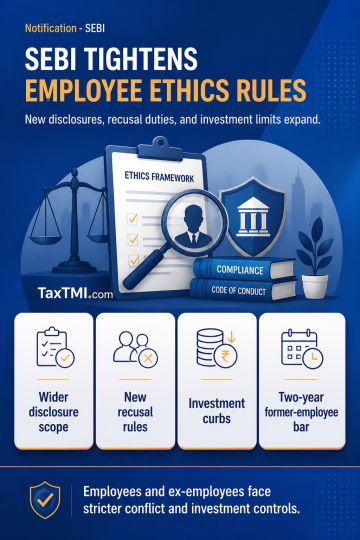
Employee conflict disclosures and investment restrictions expand with new recusal duties, post-employment limits, and compliance reporting requirement...
The HC upheld the cancellation of the petitioner's GST registration under Section 29(2)(c) of the CGST Act, 2017, due to non-filing of returns for six continuous months. However, relying on the proviso to sub-rule (4) of Rule 22 of the CGST Rules, 2017, the Court held that if the petitioner submits all pending returns and pays the outstanding tax along with interest and late fees, the empowered officer has jurisdiction to drop cancellation proceedings and restore registration by issuing Form GST REG-20. The writ petition was disposed of with a directive that the petitioner may approach the competent authority within two months to seek restoration of GST registration upon compliance with the prescribed formalities.
The HC upheld the cancellation of the petitioner's GST registration under Section 29(2)(c) of the CGST Act, 2017, due to non-filing of returns for six continuous months. However, relying on the proviso to sub-rule (4) of Rule 22 of the CGST Rules, 2017, the Court held that if the petitioner submits all pending returns and pays the outstanding tax along with interest and late fees, the empowered officer has jurisdiction to drop cancellation proceedings and restore registration by issuing Form GST REG-20. The writ petition was disposed of with a directive that the petitioner may approach the competent authority within two months to seek restoration of GST registration upon compliance with the prescribed formalities.
Note: It is a system-generated summary and is for quick reference only.
 TaxTMI
 of 4807















 Join Channel


 TaxTMI