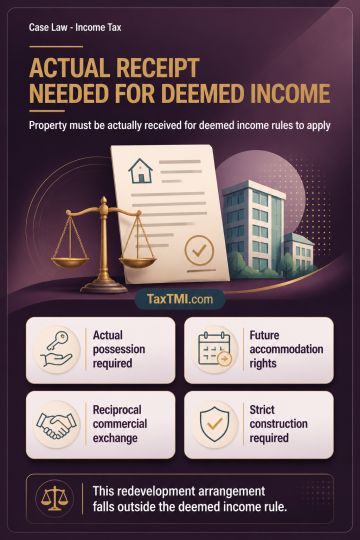
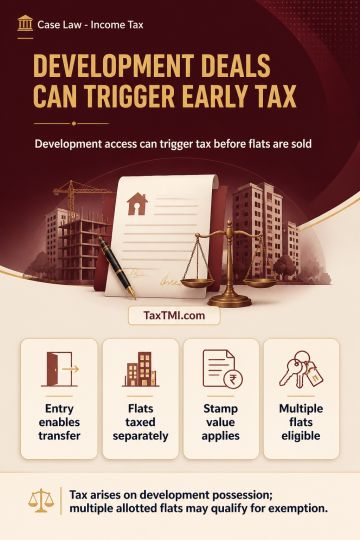
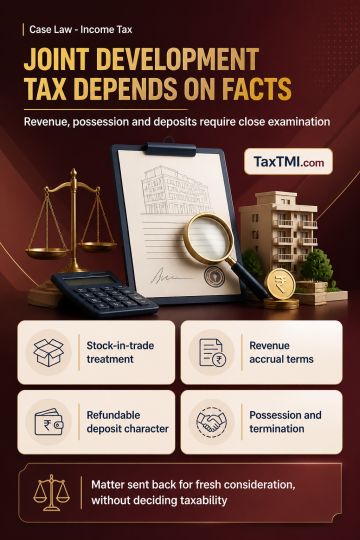
Receipt of immovable property requires actual possession or enjoyment; redevelopment allotments exchanged for tenancy rights fall outside deemed incom...
Section 80P deduction covers Souharda credit societies, including qualifying surplus-deposit interest, subject to member KYC verification for cash dep...
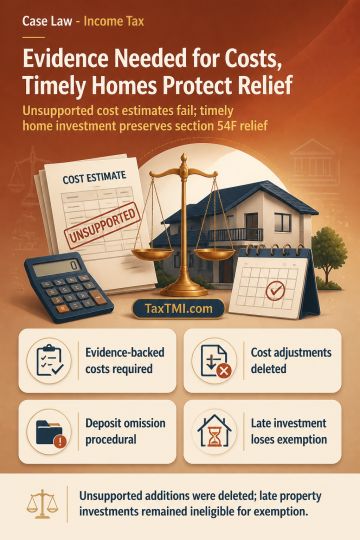
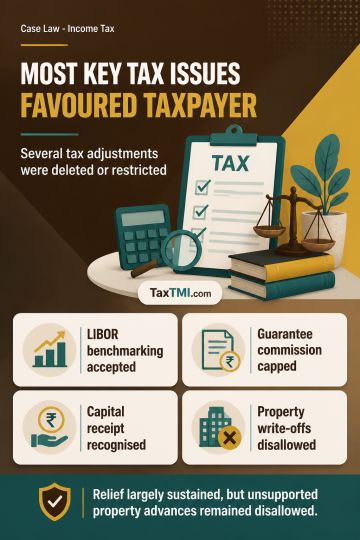
Transfer-pricing benchmarking and capital-receipt principles sustained taxpayer relief, while unsupported property-advance write-offs remained disallo...
The HC upheld the cancellation of the petitioner's GST registration under Section 29(2)(c) of the CGST Act, 2017, due to non-filing of returns for six continuous months. However, relying on the proviso to sub-rule (4) of Rule 22 of the CGST Rules, 2017, the Court held that if the petitioner submits all pending returns and pays the outstanding tax along with interest and late fees, the empowered officer has jurisdiction to drop cancellation proceedings and restore registration by issuing Form GST REG-20. The writ petition was disposed of with a directive that the petitioner may approach the competent authority within two months to seek restoration of GST registration upon compliance with the prescribed formalities.
The HC upheld the cancellation of the petitioner's GST registration under Section 29(2)(c) of the CGST Act, 2017, due to non-filing of returns for six continuous months. However, relying on the proviso to sub-rule (4) of Rule 22 of the CGST Rules, 2017, the Court held that if the petitioner submits all pending returns and pays the outstanding tax along with interest and late fees, the empowered officer has jurisdiction to drop cancellation proceedings and restore registration by issuing Form GST REG-20. The writ petition was disposed of with a directive that the petitioner may approach the competent authority within two months to seek restoration of GST registration upon compliance with the prescribed formalities.
Note: It is a system-generated summary and is for quick reference only.
 TaxTMI
 of 4805





 Join Channel


 TaxTMI
