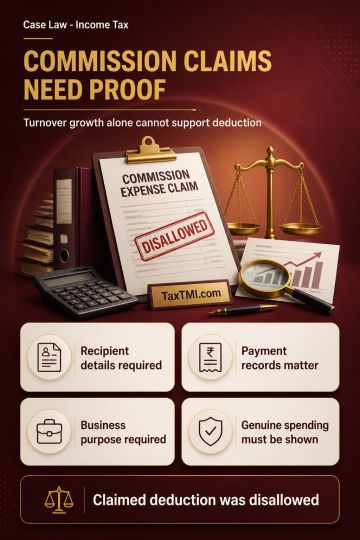
Business expenditure deduction requires proof of genuine commission payments and commercial allowability; turnover growth alone cannot validate the cl...
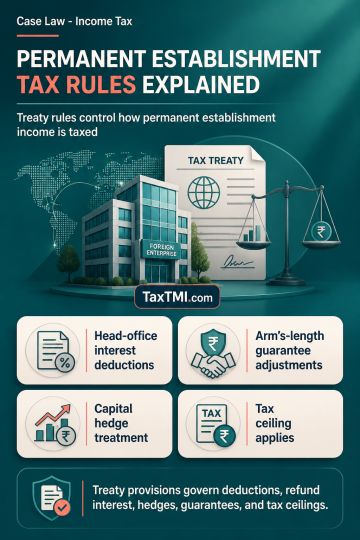
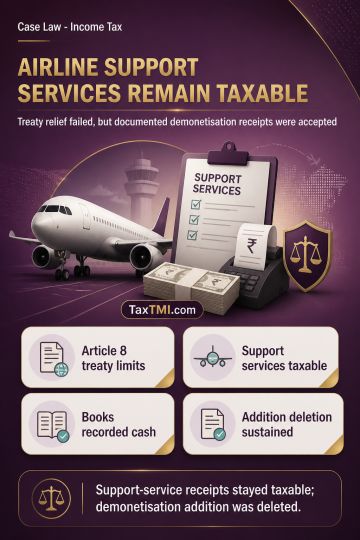
Article 8 treaty coverage excluded third-party airline support services, while documented demonetisation cash receipts remained accepted business inco...
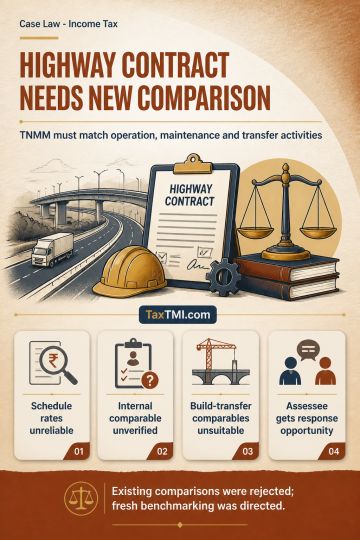
Functional comparability under TNMM requires highway contract benchmarks to reflect operation, maintenance and transfer activities, requiring fresh be...
The HC upheld the cancellation of the petitioner's GST registration under Section 29(2)(c) of the CGST Act, 2017, due to non-filing of returns for six continuous months. However, relying on the proviso to sub-rule (4) of Rule 22 of the CGST Rules, 2017, the Court held that if the petitioner submits all pending returns and pays the outstanding tax along with interest and late fees, the empowered officer has jurisdiction to drop cancellation proceedings and restore registration by issuing Form GST REG-20. The writ petition was disposed of with a directive that the petitioner may approach the competent authority within two months to seek restoration of GST registration upon compliance with the prescribed formalities.
The HC upheld the cancellation of the petitioner's GST registration under Section 29(2)(c) of the CGST Act, 2017, due to non-filing of returns for six continuous months. However, relying on the proviso to sub-rule (4) of Rule 22 of the CGST Rules, 2017, the Court held that if the petitioner submits all pending returns and pays the outstanding tax along with interest and late fees, the empowered officer has jurisdiction to drop cancellation proceedings and restore registration by issuing Form GST REG-20. The writ petition was disposed of with a directive that the petitioner may approach the competent authority within two months to seek restoration of GST registration upon compliance with the prescribed formalities.
Note: It is a system-generated summary and is for quick reference only.
 TaxTMI
 of 4805



 Join Channel


 TaxTMI