Defined public benefit can retain charitable character; registration renewal requires examining genuine activities and legal compliance, not surplus a...
Capital reduction is distinct from share buy-back, preventing buy-back tax; restructuring interest and related business deductions also survive scruti...
Transfer pricing and tax deductions upheld on established principles, while employee contributions and warranty provisions returned for fresh examinat...
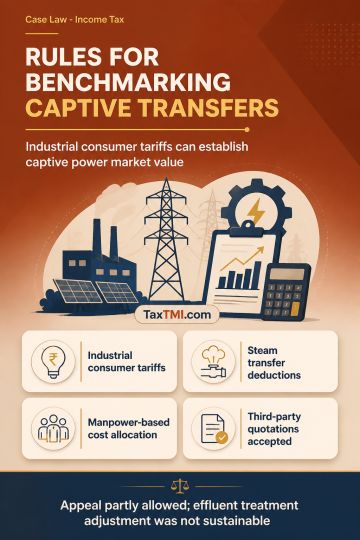
Captive transfer pricing relies on industrial consumer tariffs, while genuine quotations can benchmark effluent treatment transfers under the Other Me...
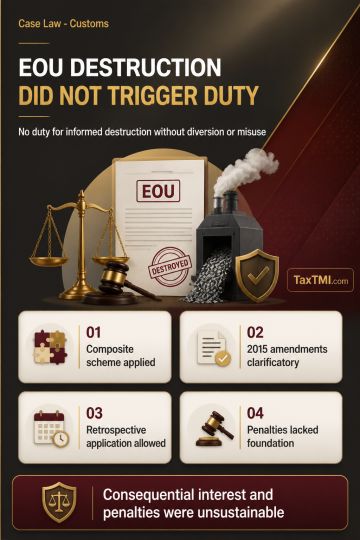
Specific tariff classification for ophthalmic instruments and extended limitation principles determine the treatment of duty demands, confiscation, an...
The HC found that service of show cause notices solely by uploading on the GST portal, without exploring alternate modes of service under Section 169 of the GST Act, violated principles of natural justice by denying the petitioner an effective opportunity of hearing. The impugned ex parte order dated 17.12.2024 was set aside due to inadequate service and lack of personal hearing. The matter was remanded to the respondent for fresh consideration, subject to the petitioner depositing 25% of the disputed tax within four weeks of receiving the order. The setting aside of the order will take effect only upon such payment. The Court emphasized that reliance on a single mode of notice without due diligence to ensure effective service undermines the objectives of the GST Act and leads to unnecessary litigation, thereby wasting judicial and administrative resources. The petition was disposed accordingly.
The HC found that service of show cause notices solely by uploading on the GST portal, without exploring alternate modes of service under Section 169 of the GST Act, violated principles of natural justice by denying the petitioner an effective opportunity of hearing. The impugned ex parte order dated 17.12.2024 was set aside due to inadequate service and lack of personal hearing. The matter was remanded to the respondent for fresh consideration, subject to the petitioner depositing 25% of the disputed tax within four weeks of receiving the order. The setting aside of the order will take effect only upon such payment. The Court emphasized that reliance on a single mode of notice without due diligence to ensure effective service undermines the objectives of the GST Act and leads to unnecessary litigation, thereby wasting judicial and administrative resources. The petition was disposed accordingly.
Note: It is a system-generated summary and is for quick reference only.
 TaxTMI
 of 4805

















 Join Channel


 TaxTMI