Necessary-party requirements limit impleadment of independent entities, while deferred consideration does not create an appealable adverse determinati...
Food supplement classification requires common parlance and authoritative tests, preventing treatment as proprietary Ayurvedic medicines without suppo...
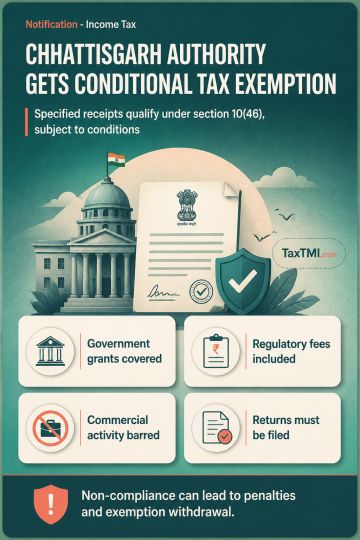
Specified regulatory authority income receives conditional tax exemption, subject to non-commercial activity, unchanged income character, and return f...
Tax exemption for regulatory authority income applies retrospectively, subject to non-commercial activity, unchanged income sources, and return-filing...
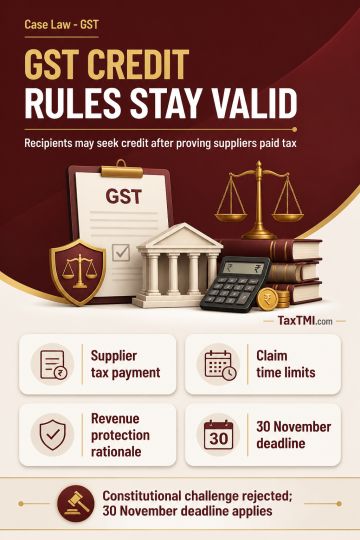
Input tax credit conditions remain constitutionally valid, with eligible recipient claims considered under GST circulars and retrospective filing dead...
The HC found that service of show cause notices solely by uploading on the GST portal, without exploring alternate modes of service under Section 169 of the GST Act, violated principles of natural justice by denying the petitioner an effective opportunity of hearing. The impugned ex parte order dated 17.12.2024 was set aside due to inadequate service and lack of personal hearing. The matter was remanded to the respondent for fresh consideration, subject to the petitioner depositing 25% of the disputed tax within four weeks of receiving the order. The setting aside of the order will take effect only upon such payment. The Court emphasized that reliance on a single mode of notice without due diligence to ensure effective service undermines the objectives of the GST Act and leads to unnecessary litigation, thereby wasting judicial and administrative resources. The petition was disposed accordingly.
The HC found that service of show cause notices solely by uploading on the GST portal, without exploring alternate modes of service under Section 169 of the GST Act, violated principles of natural justice by denying the petitioner an effective opportunity of hearing. The impugned ex parte order dated 17.12.2024 was set aside due to inadequate service and lack of personal hearing. The matter was remanded to the respondent for fresh consideration, subject to the petitioner depositing 25% of the disputed tax within four weeks of receiving the order. The setting aside of the order will take effect only upon such payment. The Court emphasized that reliance on a single mode of notice without due diligence to ensure effective service undermines the objectives of the GST Act and leads to unnecessary litigation, thereby wasting judicial and administrative resources. The petition was disposed accordingly.
Note: It is a system-generated summary and is for quick reference only.
 TaxTMI
 of 4805
















 Join Channel


 TaxTMI