TNMM functional comparability requires excluding rice manufacturers from a pure Basmati rice trader's benchmark and recognising operating export recei...
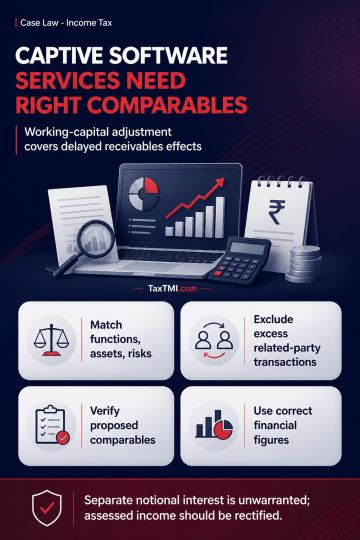
Working-capital adjustment subsumes delayed-receivable effects in TNMM benchmarking of captive software-development services, avoiding separate notion...
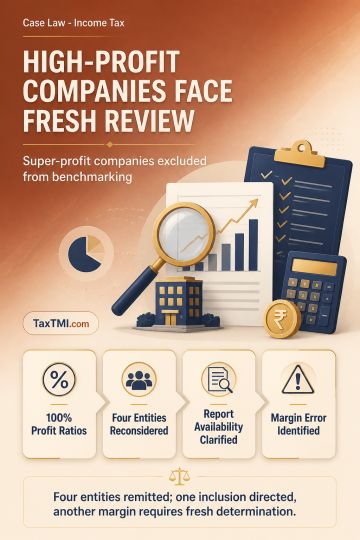
Transfer-pricing comparability requires exclusion of financially illogical super-profit comparables and correction of unsupported annual-report and ma...
Charitable character assessment preserves Section 80G approval despite inclusive spiritual teachings and incidental religious expenditure within the s...
Penalty proceedings for cash-loan acceptance require assessment proceedings and recorded Assessing Officer satisfaction; absent these, the proceedings...
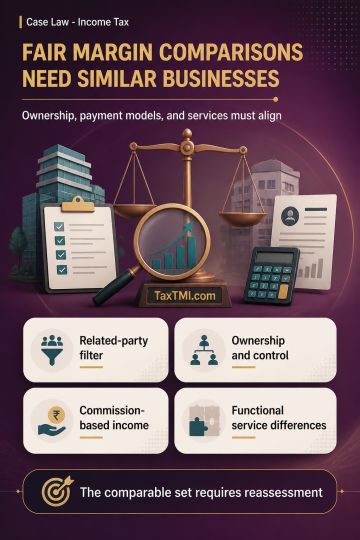
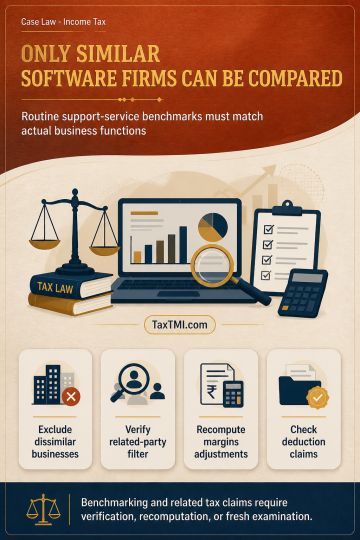
Functional comparability governs software-service benchmarking: dissimilar companies are excluded, while related-party filters, margins and working-ca...
The ITAT allowed the assessee's appeal, holding that the contribution to the Special Purpose Vehicle (SPV), mandated by the Supreme Court and administered by the Central Empowered Committee, qualifies as a business expenditure deductible under section 37(1). The payment, made to fund ameliorative and mitigative measures related to mining operations, was compulsory and directly linked to the continuation of the assessee's extraction and trading business. The tribunal distinguished the contribution from a penal imposition, noting the absence of discretion to challenge the payment and the uniform requirement imposed on all mining leaseholders regardless of irregularities. Consistent with prior decisions, the ITAT concluded the expenditure was wholly and exclusively incurred for business purposes, thereby reversing the Assessing Officer's disallowance.
The ITAT allowed the assessee's appeal, holding that the contribution to the Special Purpose Vehicle (SPV), mandated by the Supreme Court and administered by the Central Empowered Committee, qualifies as a business expenditure deductible under section 37(1). The payment, made to fund ameliorative and mitigative measures related to mining operations, was compulsory and directly linked to the continuation of the assessee's extraction and trading business. The tribunal distinguished the contribution from a penal imposition, noting the absence of discretion to challenge the payment and the uniform requirement imposed on all mining leaseholders regardless of irregularities. Consistent with prior decisions, the ITAT concluded the expenditure was wholly and exclusively incurred for business purposes, thereby reversing the Assessing Officer's disallowance.
Note: It is a system-generated summary and is for quick reference only.
 TaxTMI
  TaxTMI
 of 4830











 Join Channel


