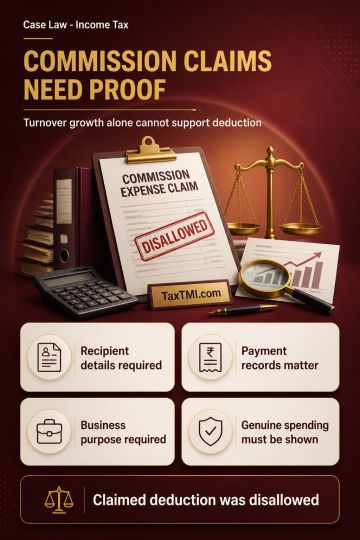
Business expenditure deduction requires proof of genuine commission payments and commercial allowability; turnover growth alone cannot validate the cl...
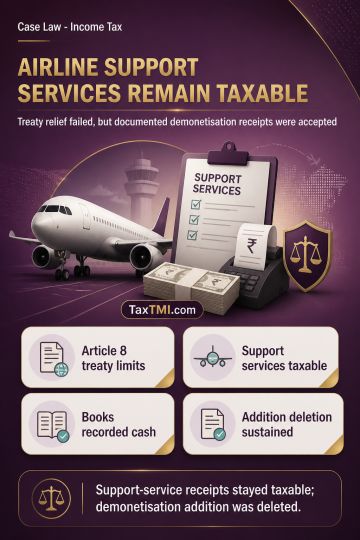
Article 8 treaty coverage excluded third-party airline support services, while documented demonetisation cash receipts remained accepted business inco...
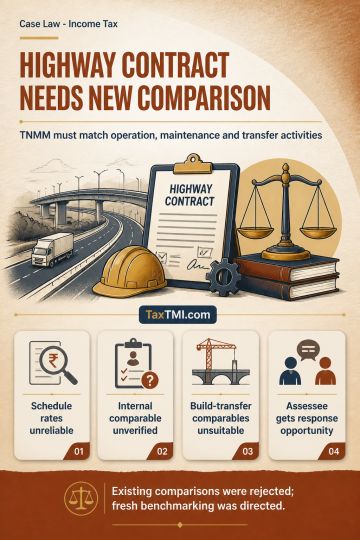
Functional comparability under TNMM requires highway contract benchmarks to reflect operation, maintenance and transfer activities, requiring fresh be...
The HC held that in the absence of any intent to evade tax, the imposition of a 200% penalty under Section 129(1) of the WBGST/CGST Act, 2017 for transporting goods without a valid e-way bill was unwarranted. The appellants' reasons for the e-way bill's expiration, which caused highway blockage, were neither disputed nor considered by the authorities. The court noted no dispute regarding the goods, their nature, or transport documents, deeming the case unsuitable for such a heavy penalty. While acknowledging the statutory requirement for a valid e-way bill, the court recognized mitigating circumstances for delay in renewal. Consequently, the penalty was reduced to a notional amount of Rs. 25,000. The appeal and writ petition were allowed, the original penalty order set aside, and the excess amount remitted by the appellants was ordered to be refunded within three weeks.
The HC held that in the absence of any intent to evade tax, the imposition of a 200% penalty under Section 129(1) of the WBGST/CGST Act, 2017 for transporting goods without a valid e-way bill was unwarranted. The appellants' reasons for the e-way bill's expiration, which caused highway blockage, were neither disputed nor considered by the authorities. The court noted no dispute regarding the goods, their nature, or transport documents, deeming the case unsuitable for such a heavy penalty. While acknowledging the statutory requirement for a valid e-way bill, the court recognized mitigating circumstances for delay in renewal. Consequently, the penalty was reduced to a notional amount of Rs. 25,000. The appeal and writ petition were allowed, the original penalty order set aside, and the excess amount remitted by the appellants was ordered to be refunded within three weeks.
Note: It is a system-generated summary and is for quick reference only.
 TaxTMI
 of 4792





 Join Channel


 TaxTMI
