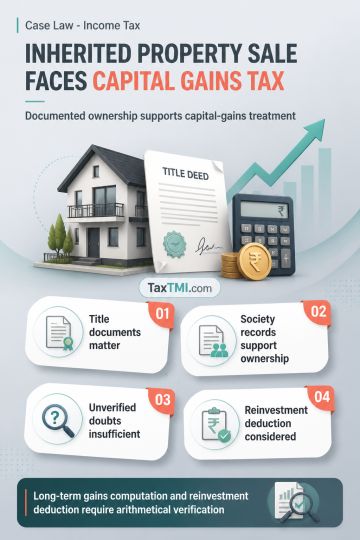
Inherited property sale proceeds require capital-gains treatment where ownership is supported by evidence, not suspicion or unverified signature doubt...
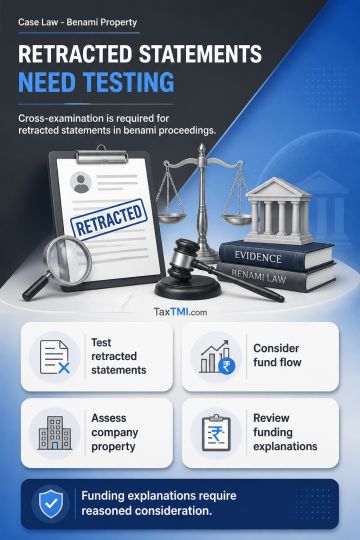
Cross-examination of retracted statements is essential where foundational evidence supports a benami allegation and documented funding explanations re...
Capital-goods exemption covers plant-modernisation accessories, while the import restriction applies only to earlier capital-goods components and spar...
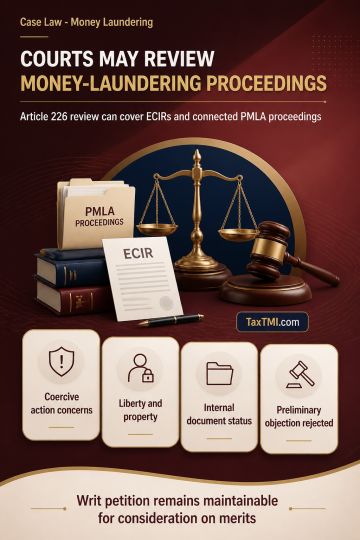
Constitutional judicial review permits challenges to ECIRs and connected money-laundering proceedings where coercive action affects fundamental intere...
The HC held that in the absence of any intent to evade tax, the imposition of a 200% penalty under Section 129(1) of the WBGST/CGST Act, 2017 for transporting goods without a valid e-way bill was unwarranted. The appellants' reasons for the e-way bill's expiration, which caused highway blockage, were neither disputed nor considered by the authorities. The court noted no dispute regarding the goods, their nature, or transport documents, deeming the case unsuitable for such a heavy penalty. While acknowledging the statutory requirement for a valid e-way bill, the court recognized mitigating circumstances for delay in renewal. Consequently, the penalty was reduced to a notional amount of Rs. 25,000. The appeal and writ petition were allowed, the original penalty order set aside, and the excess amount remitted by the appellants was ordered to be refunded within three weeks.
The HC held that in the absence of any intent to evade tax, the imposition of a 200% penalty under Section 129(1) of the WBGST/CGST Act, 2017 for transporting goods without a valid e-way bill was unwarranted. The appellants' reasons for the e-way bill's expiration, which caused highway blockage, were neither disputed nor considered by the authorities. The court noted no dispute regarding the goods, their nature, or transport documents, deeming the case unsuitable for such a heavy penalty. While acknowledging the statutory requirement for a valid e-way bill, the court recognized mitigating circumstances for delay in renewal. Consequently, the penalty was reduced to a notional amount of Rs. 25,000. The appeal and writ petition were allowed, the original penalty order set aside, and the excess amount remitted by the appellants was ordered to be refunded within three weeks.
Note: It is a system-generated summary and is for quick reference only.
 TaxTMI
 of 4790








 Join Channel


 TaxTMI