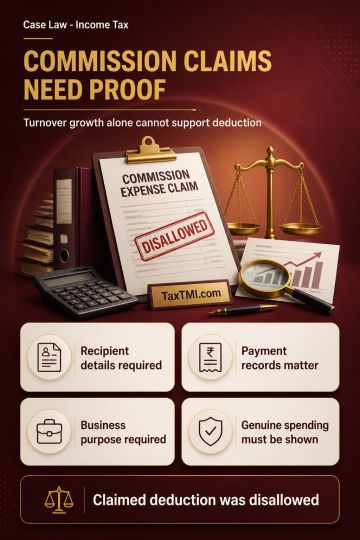
Business expenditure deduction requires proof of genuine commission payments and commercial allowability; turnover growth alone cannot validate the cl...
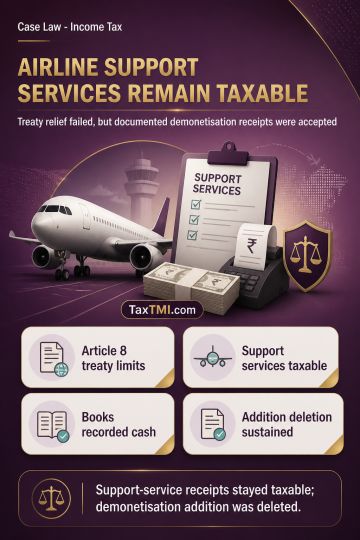
Article 8 treaty coverage excluded third-party airline support services, while documented demonetisation cash receipts remained accepted business inco...
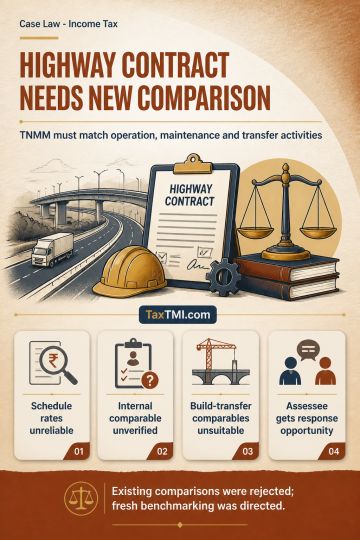
Functional comparability under TNMM requires highway contract benchmarks to reflect operation, maintenance and transfer activities, requiring fresh be...
Page of 4794
Press 'Enter' after typing page number.
401 to 420 of 95875 Results
❮
❯
❯❯
0 / 200
Expand Note
Add to Folder
No Folders have been created
+
Are you sure you want to delete "My most important" ?
The HC held that the proceedings under Section 129 of the CGST Act against the petitioner were unsustainable as the petitioner complied with the statutory requirements under Rule 138A of the CGST Rules. The petitioner produced both the invoice issued by it and the E-way bill at the time of interception, which were the requisite documents for lawful transit of goods. Alleged discrepancies raised by the revenue were not reflected in any official notices and thus could not be relied upon to justify detention. Consequently, the HC quashed the impugned notices and orders initiating the proceedings, thereby setting aside the detention of goods and terminating the action under Section 129. The writ petition was allowed, resulting in the quashing of Exts.P2, P2(a), P2(b), and P3.
The HC held that the proceedings under Section 129 of the CGST Act against the petitioner were unsustainable as the petitioner complied with the statutory requirements under Rule 138A of the CGST Rules. The petitioner produced both the invoice issued by it and the E-way bill at the time of interception, which were the requisite documents for lawful transit of goods. Alleged discrepancies raised by the revenue were not reflected in any official notices and thus could not be relied upon to justify detention. Consequently, the HC quashed the impugned notices and orders initiating the proceedings, thereby setting aside the detention of goods and terminating the action under Section 129. The writ petition was allowed, resulting in the quashing of Exts.P2, P2(a), P2(b), and P3.
Note: It is a system-generated summary and is for quick reference only.
 TaxTMI
 of 4794





 Join Channel


 TaxTMI