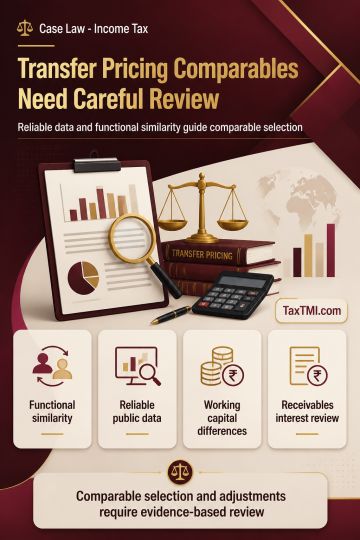
Transfer pricing comparability requires functional alignment, reliable financial data, and careful review of working capital and receivables adjustmen...
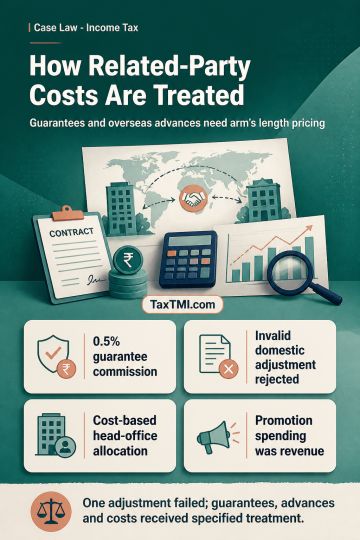
Transfer pricing rules require benchmarking corporate guarantees and associated-enterprise advances, while invalid domestic-transaction adjustments ca...
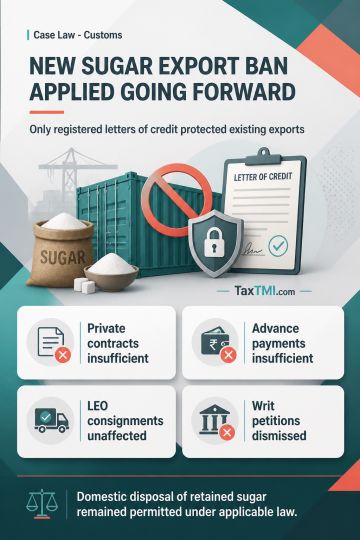
Prospective sugar export prohibition required registered letters of credit; private contracts and export quotas created no enforceable continuation ri...
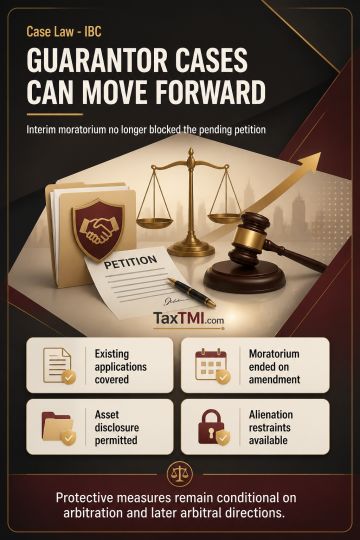
Retroactive interim-moratorium exclusion permits protective asset disclosure and preservation measures against personal guarantors pending arbitration...
The HC held that the proceedings under Section 129 of the CGST Act against the petitioner were unsustainable as the petitioner complied with the statutory requirements under Rule 138A of the CGST Rules. The petitioner produced both the invoice issued by it and the E-way bill at the time of interception, which were the requisite documents for lawful transit of goods. Alleged discrepancies raised by the revenue were not reflected in any official notices and thus could not be relied upon to justify detention. Consequently, the HC quashed the impugned notices and orders initiating the proceedings, thereby setting aside the detention of goods and terminating the action under Section 129. The writ petition was allowed, resulting in the quashing of Exts.P2, P2(a), P2(b), and P3.
The HC held that the proceedings under Section 129 of the CGST Act against the petitioner were unsustainable as the petitioner complied with the statutory requirements under Rule 138A of the CGST Rules. The petitioner produced both the invoice issued by it and the E-way bill at the time of interception, which were the requisite documents for lawful transit of goods. Alleged discrepancies raised by the revenue were not reflected in any official notices and thus could not be relied upon to justify detention. Consequently, the HC quashed the impugned notices and orders initiating the proceedings, thereby setting aside the detention of goods and terminating the action under Section 129. The writ petition was allowed, resulting in the quashing of Exts.P2, P2(a), P2(b), and P3.
Note: It is a system-generated summary and is for quick reference only.
 TaxTMI
 of 4794






 Join Channel


 TaxTMI
