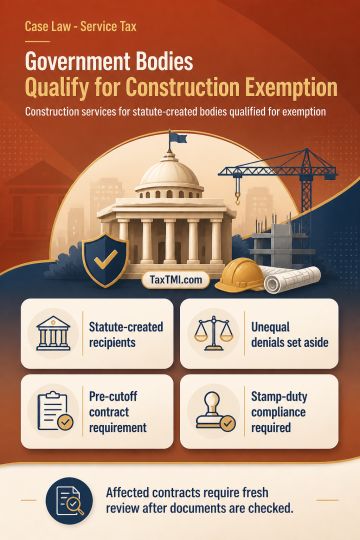
Governmental authority status supports construction-service exemption, while pre-cutoff contract and stamp-duty compliance requires verification on re...
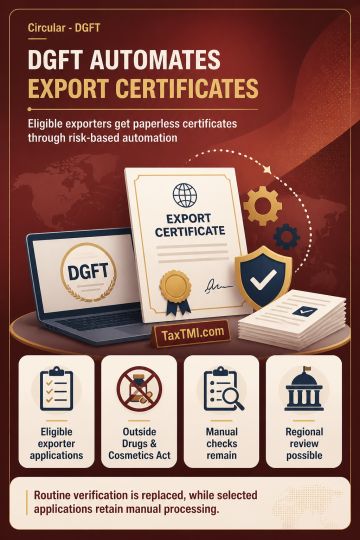
Automated Free Sale and Commerce Certificates enable paperless processing while retaining risk-based manual verification for selected exporter applica...
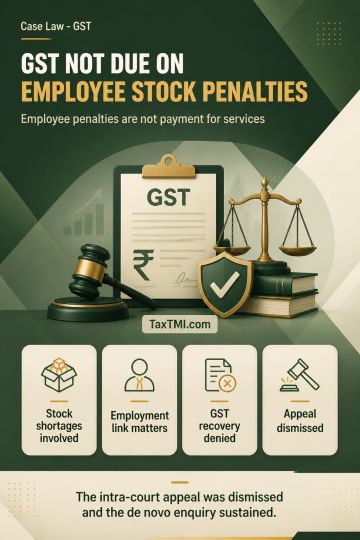
Employee stock-shortage penalties do not constitute consideration for services, preventing GST collection under Schedule II in employment relationship...
The ITAT upheld the CIT(A)'s admission of additional grounds raised by the assessee, affirming that additional claims not made in the original return can be entertained, consistent with Supreme Court precedents. The Tribunal dismissed the Revenue's grounds challenging this admission. Regarding the waiver of the working capital loan, the ITAT held that such waiver does not constitute income under section 41(1) as it is not a remission of trading liability. Further, section 28(iv) is inapplicable since the waiver resulted in a cash receipt, not a benefit in a form other than money. The Tribunal relied on authoritative judgments, including the Bombay High Court's ruling in Essar Shipping Ltd., concluding that the waiver amount is taxable only as a cash receipt and cannot be taxed as business income under section 28(iv). Consequently, the Revenue's appeal was dismissed, affirming the assessee's tax treatment of the waiver.
The ITAT upheld the CIT(A)'s admission of additional grounds raised by the assessee, affirming that additional claims not made in the original return can be entertained, consistent with Supreme Court precedents. The Tribunal dismissed the Revenue's grounds challenging this admission. Regarding the waiver of the working capital loan, the ITAT held that such waiver does not constitute income under section 41(1) as it is not a remission of trading liability. Further, section 28(iv) is inapplicable since the waiver resulted in a cash receipt, not a benefit in a form other than money. The Tribunal relied on authoritative judgments, including the Bombay High Court's ruling in Essar Shipping Ltd., concluding that the waiver amount is taxable only as a cash receipt and cannot be taxed as business income under section 28(iv). Consequently, the Revenue's appeal was dismissed, affirming the assessee's tax treatment of the waiver.
Note: It is a system-generated summary and is for quick reference only.
 TaxTMI
  TaxTMI
 of 4828









 Join Channel


