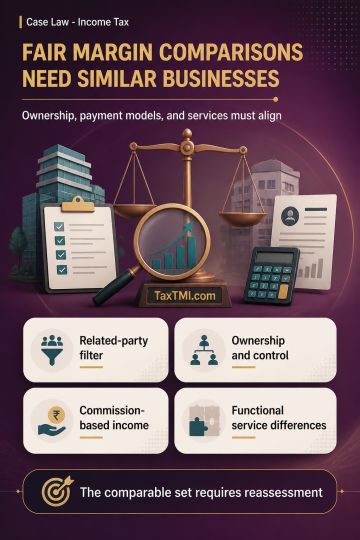
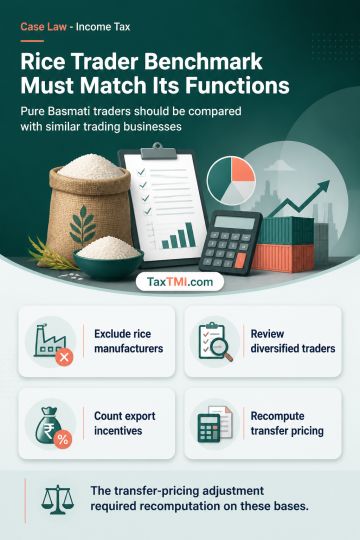
TNMM functional comparability requires excluding rice manufacturers from a pure Basmati rice trader's benchmark and recognising operating export recei...
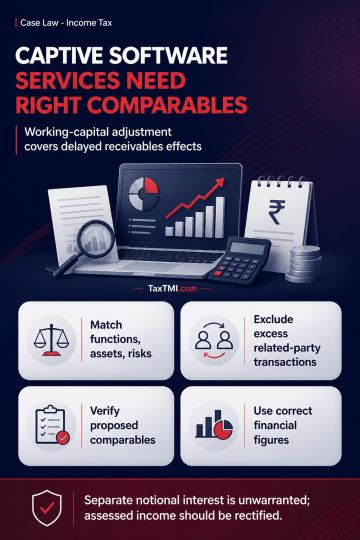
Working-capital adjustment subsumes delayed-receivable effects in TNMM benchmarking of captive software-development services, avoiding separate notion...
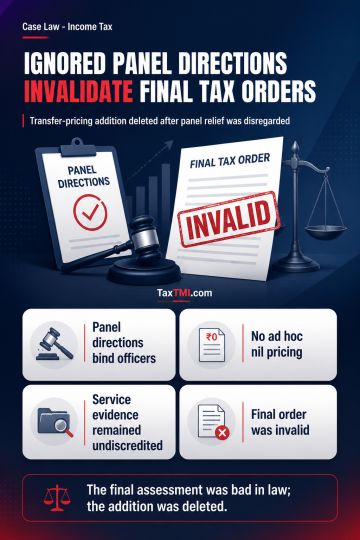
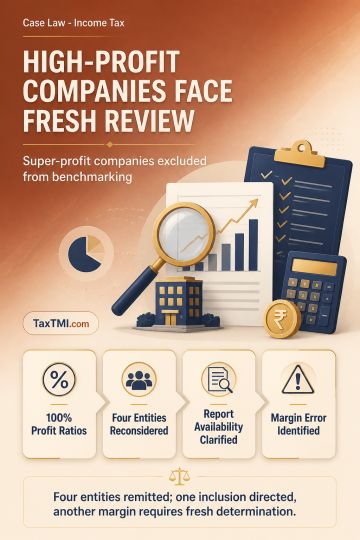
Transfer-pricing comparability requires exclusion of financially illogical super-profit comparables and correction of unsupported annual-report and ma...
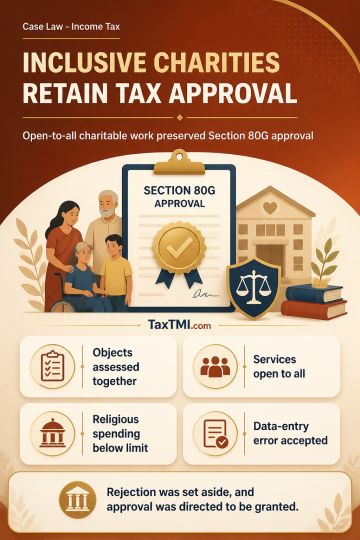
Charitable character assessment preserves Section 80G approval despite inclusive spiritual teachings and incidental religious expenditure within the s...
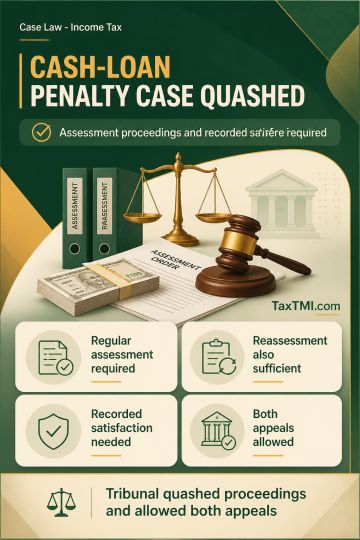
Penalty proceedings for cash-loan acceptance require assessment proceedings and recorded Assessing Officer satisfaction; absent these, the proceedings...
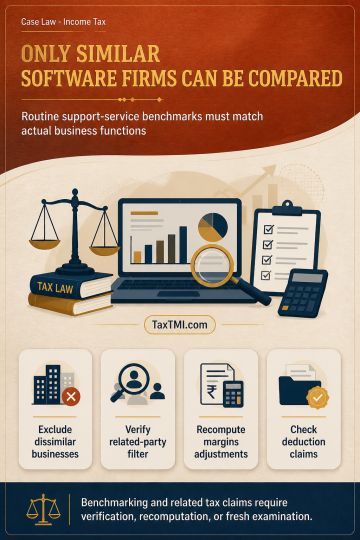
Functional comparability governs software-service benchmarking: dissimilar companies are excluded, while related-party filters, margins and working-ca...
The HC upheld the Tribunal's dismissal of the revenue's appeal concerning the refund claim under the Customs Act, 1962. It was held that the protest marked by the assessee during duty payment signifies non-voluntary payment, preventing finalization of assessment under Section 17 until reassessment proceedings are initiated. The Tribunal's reliance on this principle was affirmed, reinforcing that the refund application must comply with the one-year limitation from the Supreme Court's judgment as per Section 27(1B)(b). Additionally, since the respondent claimed interest only after 90 days from refund grant, the revenue's objection on interest timing was rejected. The HC answered the substantial questions of law against the revenue, confirming the Tribunal's order and dismissing the appeal.
The HC upheld the Tribunal's dismissal of the revenue's appeal concerning the refund claim under the Customs Act, 1962. It was held that the protest marked by the assessee during duty payment signifies non-voluntary payment, preventing finalization of assessment under Section 17 until reassessment proceedings are initiated. The Tribunal's reliance on this principle was affirmed, reinforcing that the refund application must comply with the one-year limitation from the Supreme Court's judgment as per Section 27(1B)(b). Additionally, since the respondent claimed interest only after 90 days from refund grant, the revenue's objection on interest timing was rejected. The HC answered the substantial questions of law against the revenue, confirming the Tribunal's order and dismissing the appeal.
Note: It is a system-generated summary and is for quick reference only.
 TaxTMI
  TaxTMI
 of 4830



 Join Channel


