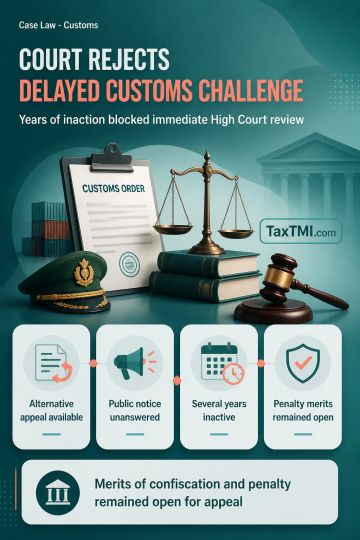
Alternative statutory remedy and unexplained delay barred writ review of customs confiscation adjudication, leaving merits for appellate consideration...
Authorised courier due diligence protects against penalties where declared exports conceal prohibited goods despite proper documentation and customs p...
Customs-controlled container movement now extends to DP World facilities, subject to segregation, inspections, reconciliation, and EXIM cargo priority...
The ITAT examined whether the remuneration paid to consultant doctors by the assessee company constituted salary liable to TDS under sections 192 or 194J, focusing on the nature of the contractual relationship as "contract of service" or "contract for service." It was held that the doctors were not employees, as remuneration depended on patient treatment volume, indicating a professional fee rather than salary. The CIT(A) failed to adequately consider critical factors such as entitlement to PF/ESI benefits and freedom to practice privately, rendering its order cryptic and incomplete. Consequently, the ITAT remanded the matter to the CIT(A)/NFAC for a detailed examination of the agreement terms to ascertain the true nature of the relationship, guided by precedents distinguishing employer-employee relationships. The appeal by the Revenue was partly allowed, directing further fact-specific inquiry.
The ITAT examined whether the remuneration paid to consultant doctors by the assessee company constituted salary liable to TDS under sections 192 or 194J, focusing on the nature of the contractual relationship as "contract of service" or "contract for service." It was held that the doctors were not employees, as remuneration depended on patient treatment volume, indicating a professional fee rather than salary. The CIT(A) failed to adequately consider critical factors such as entitlement to PF/ESI benefits and freedom to practice privately, rendering its order cryptic and incomplete. Consequently, the ITAT remanded the matter to the CIT(A)/NFAC for a detailed examination of the agreement terms to ascertain the true nature of the relationship, guided by precedents distinguishing employer-employee relationships. The appeal by the Revenue was partly allowed, directing further fact-specific inquiry.
Note: It is a system-generated summary and is for quick reference only.
 TaxTMI
  TaxTMI
 of 4828

















 Join Channel


