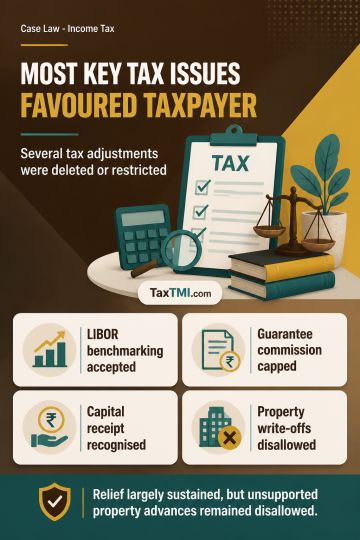
Transfer-pricing benchmarking and capital-receipt principles sustained taxpayer relief, while unsupported property-advance write-offs remained disallo...
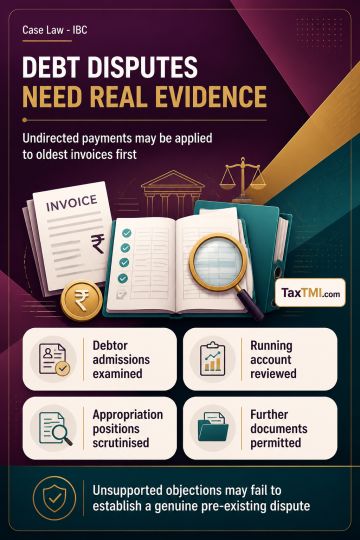
Pre-existing operational debt disputes require genuine evidence, while undirected running-account payments may be appropriated on a first-in-first-out...
Agency in CNG distribution makes outlet operators commission agents, rendering taxable Business Auxiliary Service rather than purchasing goods for res...
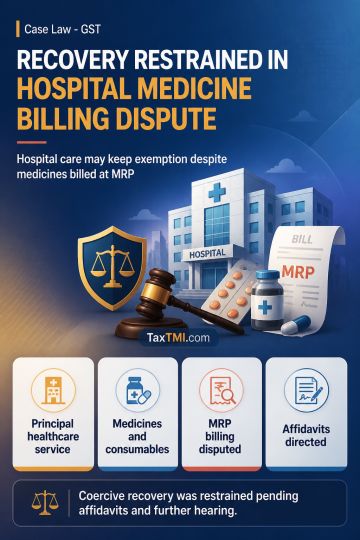
Composite inpatient healthcare supply may retain exemption despite MRP medicine billing, while separate taxable sale characterisation remains disputed...
Page of 4803
Press 'Enter' after typing page number.
1001 to 1020 of 96046 Results
❮
❯
❯❯
0 / 200
Expand Note
Add to Folder
No Folders have been created
+
Are you sure you want to delete "My most important" ?
The HC upheld the Adjudicating Authority's findings of fraudulent availment and further passing on of ITC based on invoices from non-existent entities, rejecting the petitioner's replies as insufficient to contest the investigation. The Court emphasized that establishing fraudulent ITC utilization often requires analysis across multiple financial years to reveal consistent patterns of bogus transactions. It held that the non-grant of cross-examination caused no prejudice, as all relied-upon documents were recovered from the petitioner's premises, who was aware of the actual status of the parties involved. The HC declined to reappraise factual findings in writ jurisdiction, noting its limited scope under Articles 226 and 227. The petitioner was granted an extended period until 31 August 2025 to file a time-barred appeal with requisite pre-deposit, which will be heard on merits if filed within the stipulated time. The petition was disposed of accordingly.
The HC upheld the Adjudicating Authority's findings of fraudulent availment and further passing on of ITC based on invoices from non-existent entities, rejecting the petitioner's replies as insufficient to contest the investigation. The Court emphasized that establishing fraudulent ITC utilization often requires analysis across multiple financial years to reveal consistent patterns of bogus transactions. It held that the non-grant of cross-examination caused no prejudice, as all relied-upon documents were recovered from the petitioner's premises, who was aware of the actual status of the parties involved. The HC declined to reappraise factual findings in writ jurisdiction, noting its limited scope under Articles 226 and 227. The petitioner was granted an extended period until 31 August 2025 to file a time-barred appeal with requisite pre-deposit, which will be heard on merits if filed within the stipulated time. The petition was disposed of accordingly.
Note: It is a system-generated summary and is for quick reference only.
 TaxTMI
 of 4803









 Join Channel


 TaxTMI