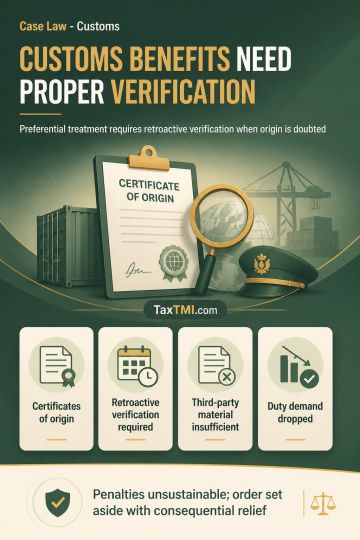
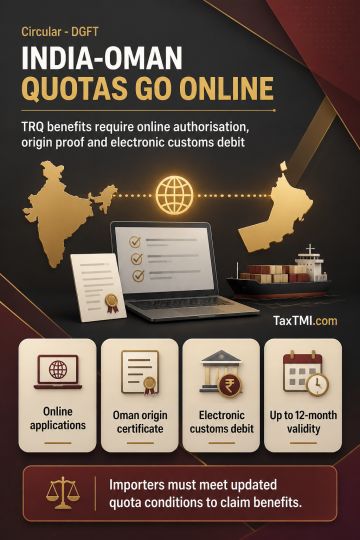
Certificate-of-origin verification procedure governs preferential customs benefits; denial without retroactive verification was set aside with consequ...
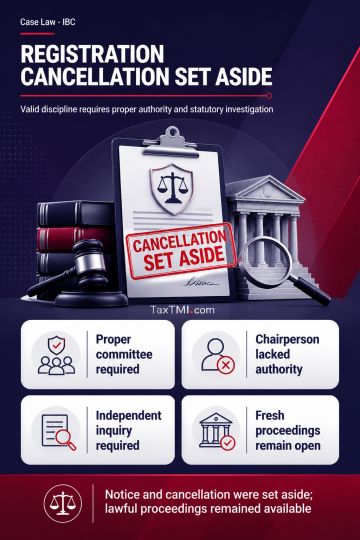
Disciplinary Committee jurisdiction and mandatory investigation requirements invalidated cancellation of an insolvency professional's registration and...
Retention of seized property survives where recorded reasons support proceeds of crime, while stayed investigation periods are excluded from limitatio...
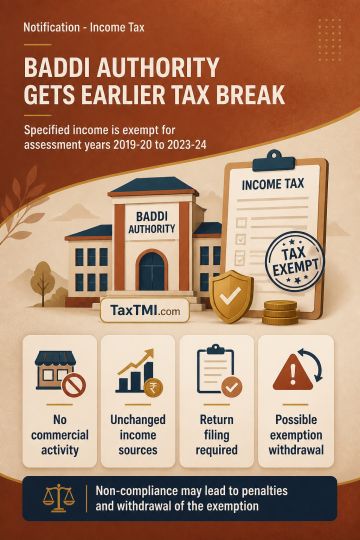
Specified income of Baddi Barotiwala Nalagarh Development Authority receives conditional tax exemption, retrospectively covering its designated assess...
Specified development authority income receives retrospective tax exemption, subject to non-commercial activity, unchanged income sources, and return-...
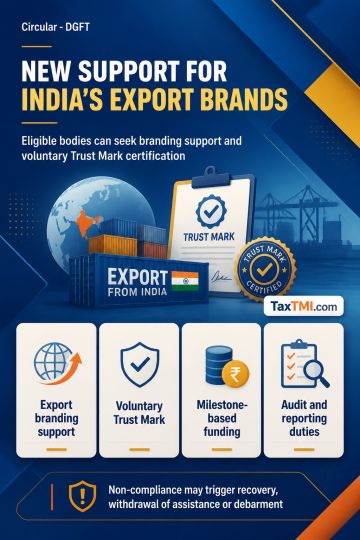
Unified Brand India framework introduces voluntary Trust Mark certification and funding support for export branding, packaging and global promotional ...
The DSC dismissed the bail application of the accused, a key partner of the manufacturing firm, arrested under Section 69 of the CGST Act for clandestine supply of goods without invoicing and fraudulent availing of ITC. Investigation revealed extensive cash transactions amounting to approximately Rs. 70 crore, misuse of input tax credit exceeding Rs. 9.32 crore, and GST evasion of Rs. 57.82 lakh. The accused confessed to the offences, including receipt of cash payments and payment of commission for fraudulent invoices. Given the absence of a charge sheet, the likelihood of evidence tampering, witness influence, and risk of flight, the court found bail inappropriate. Considering the gravity of the economic offences and established legal principles, the accused was denied bail to prevent obstruction of justice and ensure accountability.
The DSC dismissed the bail application of the accused, a key partner of the manufacturing firm, arrested under Section 69 of the CGST Act for clandestine supply of goods without invoicing and fraudulent availing of ITC. Investigation revealed extensive cash transactions amounting to approximately Rs. 70 crore, misuse of input tax credit exceeding Rs. 9.32 crore, and GST evasion of Rs. 57.82 lakh. The accused confessed to the offences, including receipt of cash payments and payment of commission for fraudulent invoices. Given the absence of a charge sheet, the likelihood of evidence tampering, witness influence, and risk of flight, the court found bail inappropriate. Considering the gravity of the economic offences and established legal principles, the accused was denied bail to prevent obstruction of justice and ensure accountability.
Note: It is a system-generated summary and is for quick reference only.
 TaxTMI
 of 4803











 Join Channel


 TaxTMI