Captive power transfer pricing and non-resident export commission rules support deletion of adjustments and withholding disallowance in discussed proc...
Cooperative society deposits, member-interest TDS exemption and credit-facility deduction claims require verification through records and supporting e...
Customs jurisdiction over EPCG condition breaches survives export-obligation discharge certificates, requiring alleged fraud and misdeclaration to be ...
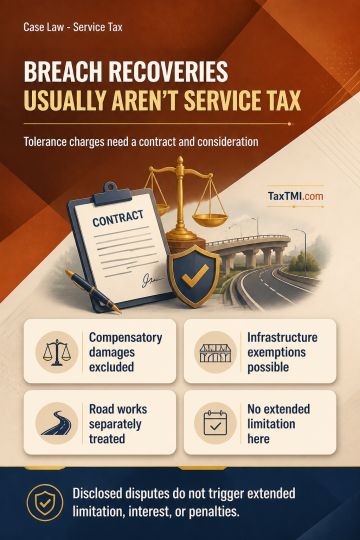
Contractual tolerance requires consideration; breach recoveries, qualifying public infrastructure services and road works escape service tax liability...
The DSC dismissed the bail application of the accused, a key partner of the manufacturing firm, arrested under Section 69 of the CGST Act for clandestine supply of goods without invoicing and fraudulent availing of ITC. Investigation revealed extensive cash transactions amounting to approximately Rs. 70 crore, misuse of input tax credit exceeding Rs. 9.32 crore, and GST evasion of Rs. 57.82 lakh. The accused confessed to the offences, including receipt of cash payments and payment of commission for fraudulent invoices. Given the absence of a charge sheet, the likelihood of evidence tampering, witness influence, and risk of flight, the court found bail inappropriate. Considering the gravity of the economic offences and established legal principles, the accused was denied bail to prevent obstruction of justice and ensure accountability.
The DSC dismissed the bail application of the accused, a key partner of the manufacturing firm, arrested under Section 69 of the CGST Act for clandestine supply of goods without invoicing and fraudulent availing of ITC. Investigation revealed extensive cash transactions amounting to approximately Rs. 70 crore, misuse of input tax credit exceeding Rs. 9.32 crore, and GST evasion of Rs. 57.82 lakh. The accused confessed to the offences, including receipt of cash payments and payment of commission for fraudulent invoices. Given the absence of a charge sheet, the likelihood of evidence tampering, witness influence, and risk of flight, the court found bail inappropriate. Considering the gravity of the economic offences and established legal principles, the accused was denied bail to prevent obstruction of justice and ensure accountability.
Note: It is a system-generated summary and is for quick reference only.
 TaxTMI
 of 4801















 Join Channel


 TaxTMI