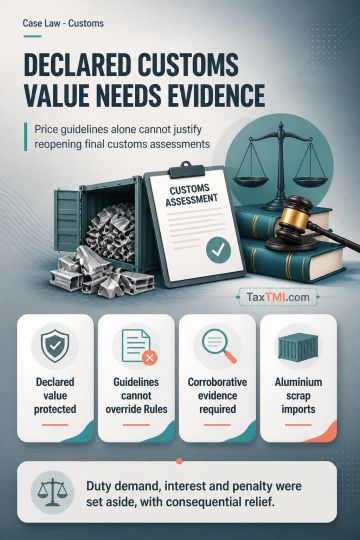
Transaction value cannot be rejected solely on non-statutory valuation guidelines without corroborative evidence supporting reassessment of final cust...
Cross-examination rights and corroborated evidence limit customs penalties for misdeclaration in genuine import transactions involving documented clea...
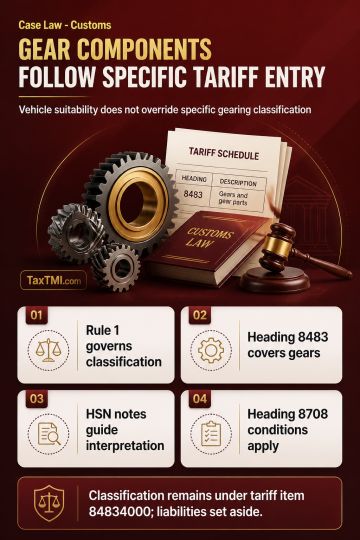
Tariff classification of vehicle gear components follows the specific gearing entry, displacing motor-vehicle parts classification and related liabili...
Necessary-party requirements limit impleadment of independent entities, while deferred consideration does not create an appealable adverse determinati...
Food supplement classification requires common parlance and authoritative tests, preventing treatment as proprietary Ayurvedic medicines without suppo...
The DSC dismissed the bail application of the accused, a key partner of the manufacturing firm, arrested under Section 69 of the CGST Act for clandestine supply of goods without invoicing and fraudulent availing of ITC. Investigation revealed extensive cash transactions amounting to approximately Rs. 70 crore, misuse of input tax credit exceeding Rs. 9.32 crore, and GST evasion of Rs. 57.82 lakh. The accused confessed to the offences, including receipt of cash payments and payment of commission for fraudulent invoices. Given the absence of a charge sheet, the likelihood of evidence tampering, witness influence, and risk of flight, the court found bail inappropriate. Considering the gravity of the economic offences and established legal principles, the accused was denied bail to prevent obstruction of justice and ensure accountability.
The DSC dismissed the bail application of the accused, a key partner of the manufacturing firm, arrested under Section 69 of the CGST Act for clandestine supply of goods without invoicing and fraudulent availing of ITC. Investigation revealed extensive cash transactions amounting to approximately Rs. 70 crore, misuse of input tax credit exceeding Rs. 9.32 crore, and GST evasion of Rs. 57.82 lakh. The accused confessed to the offences, including receipt of cash payments and payment of commission for fraudulent invoices. Given the absence of a charge sheet, the likelihood of evidence tampering, witness influence, and risk of flight, the court found bail inappropriate. Considering the gravity of the economic offences and established legal principles, the accused was denied bail to prevent obstruction of justice and ensure accountability.
Note: It is a system-generated summary and is for quick reference only.
 TaxTMI
 of 4800


















 Join Channel


 TaxTMI
