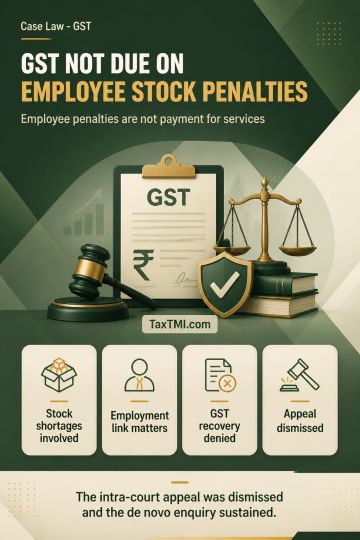
Employee stock-shortage penalties do not constitute consideration for services, preventing GST collection under Schedule II in employment relationship...
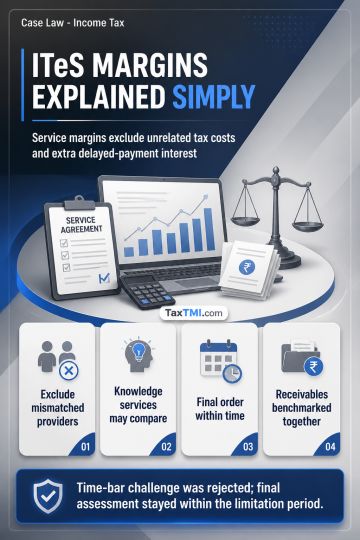
Transfer-pricing treatment of ITeS margins excludes pass-through tax recoveries and separate delayed-receivables interest after working-capital adjust...
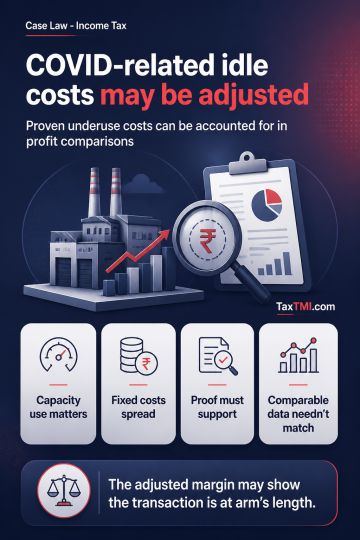
Capacity-utilisation adjustments under TNMM can neutralise substantiated COVID-related idle costs where underutilisation materially affects profitabil...
Page of 4830
Press 'Enter' after typing page number.
181 to 200 of 96587 Results
❮
❯
❯❯
0 / 200
Expand Note
Add to Folder
No Folders have been created
+
Are you sure you want to delete "My most important" ?
The SC held that High Courts should ordinarily refrain from passing strictures against judicial officers while adjudicating judicial matters, reaffirming established precedent. In this case, the High Court issued adverse comments against the appellant-judicial officer without affording any opportunity to explain or show cause, thereby violating principles of natural justice. The impugned order was based on a precedent subsequently overruled by this Court. Consequently, the strictures were deemed unwarranted and were expunged. The SC modified the High Court's order accordingly and allowed the appeal.
The SC held that High Courts should ordinarily refrain from passing strictures against judicial officers while adjudicating judicial matters, reaffirming established precedent. In this case, the High Court issued adverse comments against the appellant-judicial officer without affording any opportunity to explain or show cause, thereby violating principles of natural justice. The impugned order was based on a precedent subsequently overruled by this Court. Consequently, the strictures were deemed unwarranted and were expunged. The SC modified the High Court's order accordingly and allowed the appeal.
Note: It is a system-generated summary and is for quick reference only.
 TaxTMI
  TaxTMI
 of 4830







 Join Channel


