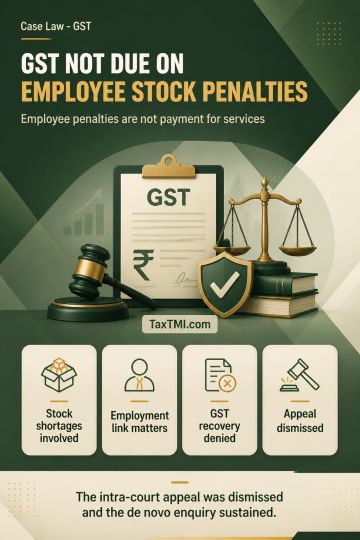
Employee stock-shortage penalties do not constitute consideration for services, preventing GST collection under Schedule II in employment relationship...
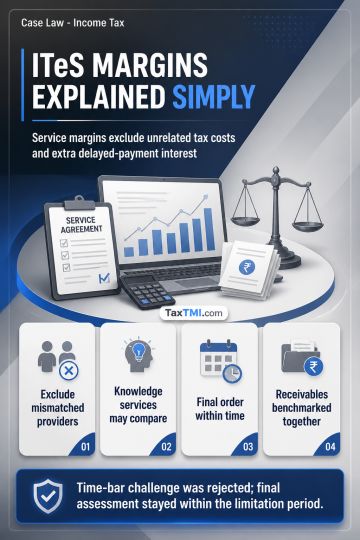
Transfer-pricing treatment of ITeS margins excludes pass-through tax recoveries and separate delayed-receivables interest after working-capital adjust...
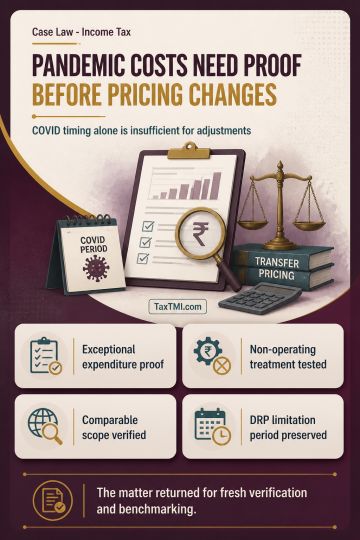
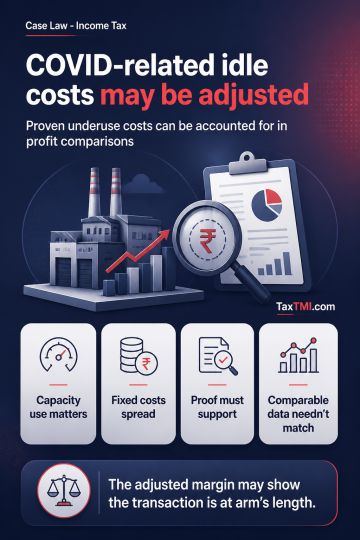
Capacity-utilisation adjustments under TNMM can neutralise substantiated COVID-related idle costs where underutilisation materially affects profitabil...
Page of 4830
Press 'Enter' after typing page number.
181 to 200 of 96587 Results
❮
❯
❯❯
0 / 200
Expand Note
Add to Folder
No Folders have been created
+
Are you sure you want to delete "My most important" ?
The HC upheld the acquittal of the accused in a cheque dishonour case due to insufficiency of funds, finding no perversity or illegality in the trial court's appreciation of evidence. The complainant failed to establish the existence of a legally enforceable debt or liability discharged by the cheque, especially as the statutory presumption under Section 139 of the N.I. Act was not attracted. Independent and credible evidence to substantiate the debt was lacking, and the accused's version was found more probable. The appellate court emphasized the high threshold for interference with acquittal orders, which requires the trial court's conclusion to be manifestly unjust or perverse. Since two views were possible and the trial court's reasoning was reasonable, the appeal against acquittal was dismissed, affirming the accused's innocence and maintaining the presumption in their favor.
The HC upheld the acquittal of the accused in a cheque dishonour case due to insufficiency of funds, finding no perversity or illegality in the trial court's appreciation of evidence. The complainant failed to establish the existence of a legally enforceable debt or liability discharged by the cheque, especially as the statutory presumption under Section 139 of the N.I. Act was not attracted. Independent and credible evidence to substantiate the debt was lacking, and the accused's version was found more probable. The appellate court emphasized the high threshold for interference with acquittal orders, which requires the trial court's conclusion to be manifestly unjust or perverse. Since two views were possible and the trial court's reasoning was reasonable, the appeal against acquittal was dismissed, affirming the accused's innocence and maintaining the presumption in their favor.
Note: It is a system-generated summary and is for quick reference only.
 TaxTMI
  TaxTMI
 of 4830










 Join Channel


