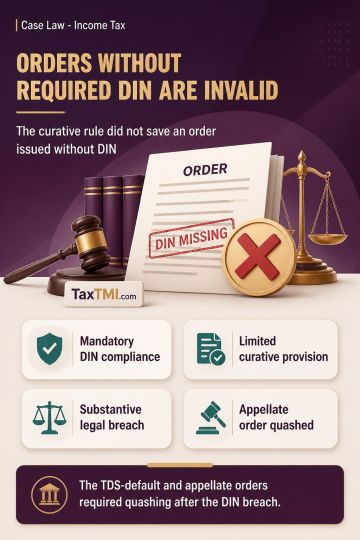
Document Identification Number compliance renders TDS-default orders invalid where mandatory DIN requirements are breached and curative provision does...
The HC held that income tax proceedings against the dissolved company cannot continue, as the IBC 2016, under Section 238, overrides any inconsistent provisions of the Income-Tax Act. Income-tax dues, classified as Crown debts, do not have priority over secured creditors under insolvency proceedings. The appeals are adjourned sine die, with liberty granted to the parties to seek re-listing after the NCLT either approves a resolution plan or orders the company's winding up. The Court will then determine the viability of proceeding with the appeals.
The HC held that income tax proceedings against the dissolved company cannot continue, as the IBC 2016, under Section 238, overrides any inconsistent provisions of the Income-Tax Act. Income-tax dues, classified as Crown debts, do not have priority over secured creditors under insolvency proceedings. The appeals are adjourned sine die, with liberty granted to the parties to seek re-listing after the NCLT either approves a resolution plan or orders the company's winding up. The Court will then determine the viability of proceeding with the appeals.
Note: It is a system-generated summary and is for quick reference only.
 TaxTMI
  TaxTMI
 of 4918