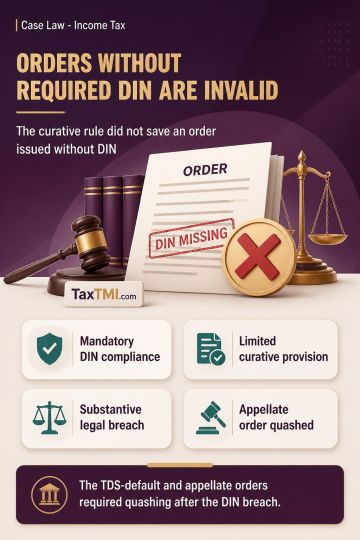
Document Identification Number compliance renders TDS-default orders invalid where mandatory DIN requirements are breached and curative provision does...
The ITAT held that the approval granted under section 153D was invalid as the Approving Authority failed to independently examine the assessment records or seized materials before granting consolidated approval. The approval was based solely on the draft assessment order without any application of mind, rendering it a mechanical and perfunctory act. Consequently, the approval did not comply with the statutory requirements under section 153D. The tribunal set aside the approval, holding it to be void ab initio, and allowed the assessee's appeal.
The ITAT held that the approval granted under section 153D was invalid as the Approving Authority failed to independently examine the assessment records or seized materials before granting consolidated approval. The approval was based solely on the draft assessment order without any application of mind, rendering it a mechanical and perfunctory act. Consequently, the approval did not comply with the statutory requirements under section 153D. The tribunal set aside the approval, holding it to be void ab initio, and allowed the assessee's appeal.
Note: It is a system-generated summary and is for quick reference only.
 TaxTMI
  TaxTMI
 of 4918