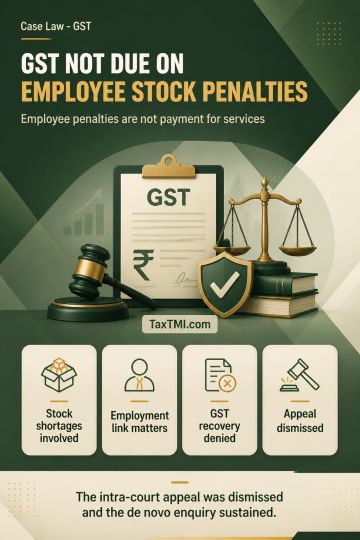
Employee stock-shortage penalties do not constitute consideration for services, preventing GST collection under Schedule II in employment relationship...
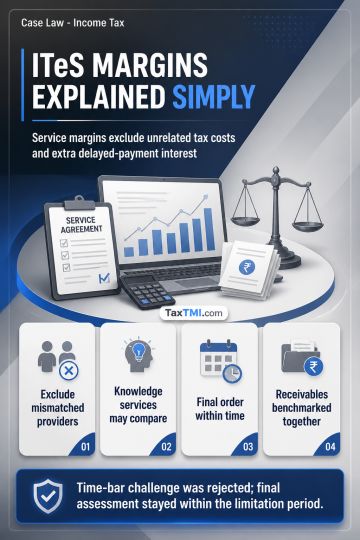
Transfer-pricing treatment of ITeS margins excludes pass-through tax recoveries and separate delayed-receivables interest after working-capital adjust...
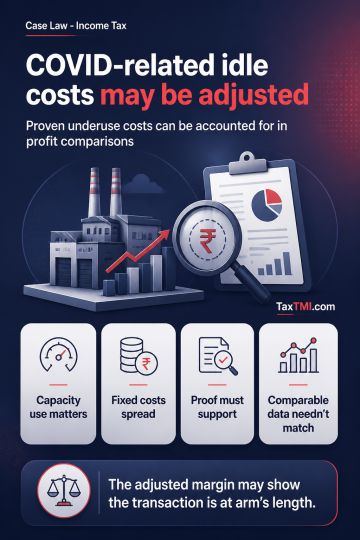
Capacity-utilisation adjustments under TNMM can neutralise substantiated COVID-related idle costs where underutilisation materially affects profitabil...
Page of 4830
Press 'Enter' after typing page number.
181 to 200 of 96587 Results
❮
❯
❯❯
0 / 200
Expand Note
Add to Folder
No Folders have been created
+
Are you sure you want to delete "My most important" ?
The SC held that oil contained in bunker tanks, whether inside or outside the engine room of vessels sent for scrapping, must be valued and assessed as part of the ship itself rather than separately. This decision aligns with the precedent established in M/S Mahalaxmi Ship Breaking Corp. v. Commissioner of Customs Bhavnagar, which clarified the valuation approach for such cases. Consequently, the appeal was dismissed in accordance with this binding precedent, confirming that the oil's assessment cannot be segregated from the vessel's overall valuation for customs purposes.
The SC held that oil contained in bunker tanks, whether inside or outside the engine room of vessels sent for scrapping, must be valued and assessed as part of the ship itself rather than separately. This decision aligns with the precedent established in M/S Mahalaxmi Ship Breaking Corp. v. Commissioner of Customs Bhavnagar, which clarified the valuation approach for such cases. Consequently, the appeal was dismissed in accordance with this binding precedent, confirming that the oil's assessment cannot be segregated from the vessel's overall valuation for customs purposes.
Note: It is a system-generated summary and is for quick reference only.
 TaxTMI
  TaxTMI
 of 4830







 Join Channel


