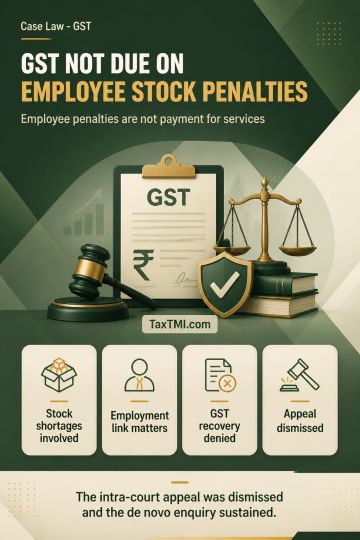
Employee stock-shortage penalties do not constitute consideration for services, preventing GST collection under Schedule II in employment relationship...
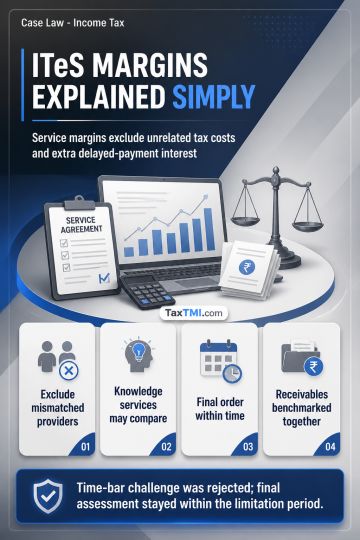
Transfer-pricing treatment of ITeS margins excludes pass-through tax recoveries and separate delayed-receivables interest after working-capital adjust...
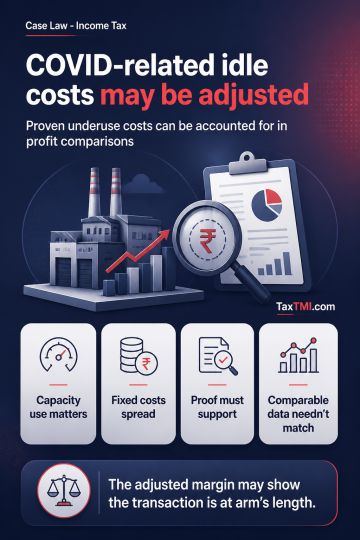
Capacity-utilisation adjustments under TNMM can neutralise substantiated COVID-related idle costs where underutilisation materially affects profitabil...
Page of 4830
Press 'Enter' after typing page number.
181 to 200 of 96587 Results
❮
❯
❯❯
0 / 200
Expand Note
Add to Folder
No Folders have been created
+
Are you sure you want to delete "My most important" ?
The HC upheld the decision of the CESTAT, dismissing the appeal against the respondents regarding recovery of customs duty under Sections 28 and 147 of the Customs Act, 1962. The court found no basis to impose liability on the respondents for the wrongful acts of their agent, noting the respondents' demonstration of bona fide conduct through payment evidence. The statements implicating the agent in malafide activities were insufficient to extend liability to the principal importers under Section 147(2). As the appellant's contentions were confined to factual disputes resolved in favor of the respondents, no substantial question of law arose warranting interference. Consequently, the appellant's appeal was dismissed, affirming the Tribunal's order in favor of the respondents.
The HC upheld the decision of the CESTAT, dismissing the appeal against the respondents regarding recovery of customs duty under Sections 28 and 147 of the Customs Act, 1962. The court found no basis to impose liability on the respondents for the wrongful acts of their agent, noting the respondents' demonstration of bona fide conduct through payment evidence. The statements implicating the agent in malafide activities were insufficient to extend liability to the principal importers under Section 147(2). As the appellant's contentions were confined to factual disputes resolved in favor of the respondents, no substantial question of law arose warranting interference. Consequently, the appellant's appeal was dismissed, affirming the Tribunal's order in favor of the respondents.
Note: It is a system-generated summary and is for quick reference only.
 TaxTMI
  TaxTMI
 of 4830



 Join Channel


